Cities and their making understood and sometimes imagined .

The City as a Conversation – In Memory of Jürgen Habermas

Jürgen Habermas has died, and with him one of the last great figures of a generation of philosophers who still believed that thinking could help society understand itself. For many readers he was a demanding thinker – precise, rigorous – sometimes almost stubbornly committed to the slow work of...

The City as a Conversation – In Memory of Jürgen Habermas

Jürgen Habermas has died, and with him one of the last great figures of a generation of philosophers who still believed that thinking could help society understand itself. For many readers he was a demanding thinker – precise, rigorous – sometimes almost stubbornly committed to the slow work of...

Collections

Writing

Towards a New Aesthetic

When discussing climate change, we – Architects and Urbanists  –  most of the time talk about materials that should be less carbon intensive, and we talk about processes that...

THE SQUARE THAT HELD THE WORLD

A Novel Paris Before the Line On the mornings when the light arrived softly over the Seine, Leonie Moreau believed the world might yet be persuaded. She lived on...

Beyond the Edge of the City

Why Saudi Arabia’s next phase of urban growth depends less on how much it builds, and more on where it points its momentum For more than two decades, urban...

Why Smart Cities Are a Stupid Idea

It all sounds so smart and its vision is seductive: the smart city. Imagine a place where traffic flows seamlessly, waste disappears efficiently, energy is optimized, and safety is...

Draw a red line.

It keeps coming back: the populist and liberal demand that cities should extend at their edges since people want to live in a green and affordable environment. Covid-19 comes...

The Productive Inconvenience of Parking

What Happens When Your Car Isn’t Under Your Bedroom I own cars in several cities where I live. That is a confession many urbanists are expected to preface with...

Writing

On the Semiotics of Stakeholder Alignment

An interpretive essay on the performative linguistics of contemporary planning practice Decoding the Dialect of Planning Urban planning is, among many things, a language. A curious mix of optimism,...

Latest Speaking

Urban Development Trends in Tbilisi and the World

BMG, a Georgian news outlet interviewed me about my view on the City of Tbilisi and what problems need to be solved there. Comparing international urban development concepts like the 15 Minute City with what the urban fabric of Tbilisi offers lead to a discussion about the right concepts to use locally: learn – don’t […]

Latest Teaching

About Me

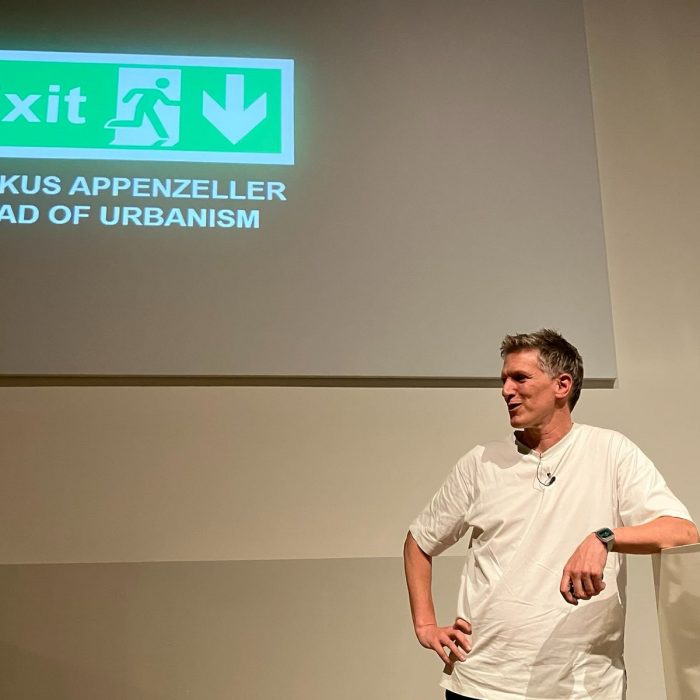
Markus Appenzeller

I have spent my career moving along the boundaries of architecture, landscape, and urban planning—spaces where disciplines overlap, cities evolve, and new ideas emerge. From London to Shenzhen, Semarang to Accra, my work is driven by a fascination with how places grow, adapt, and shape the lives of the people who inhabit them.

Writing, speaking, and teaching are essential parts of that journey. They allow me to question assumptions, share what I’ve learned, and learn from others in return. I write to make sense of the forces shaping our cities, to communicate ideas clearly, and to provoke thoughtful debate. I teach because every new generation of urbanists brings perspectives that push the field forward. And I speak publicly to connect practice and policy, bridging the gap between technical expertise and the broader conversations cities need.

Today, alongside my work with MLA+, I serve as Chief Technical Adviser to a nationwide spatial planning reform in Saudi Arabia with UNDP and UN-Habitat. When time and context allows, I am also teaching and have been heading the Urbanism Department at the Amsterdam Academy of Architecture and at the Shenzhen International School of Design

Cities are constantly changing; my motivation is to help steer that change – in words and deeds –  toward more resilient, thoughtful, and inspiring futures.