Urban planners arrive in cities with a quiet sense of professional optimism. We believe that if we look carefully enough, systems will reveal themselves. Traffic will follow logic. Streets will obey hierarchy. Land uses will, at the very least, respect the concept of zoning. Bangkok challenges this optimism within roughly thirty minutes.
The first encounter is usually the sidewalk. Or rather, the philosophical idea of a sidewalk. It begins confidently enough — tiled, well intentioned, clearly designed for pedestrians. After twenty meters it dissolves into a noodle stall, a small shrine, three parked motorbikes, a rack of T-shirts, and a man repairing a fan. At this point the planner pauses and wonders if perhaps the sidewalk has been temporarily repurposed. After a few days one realizes the sidewalk has not been repurposed. This is the sidewalk.
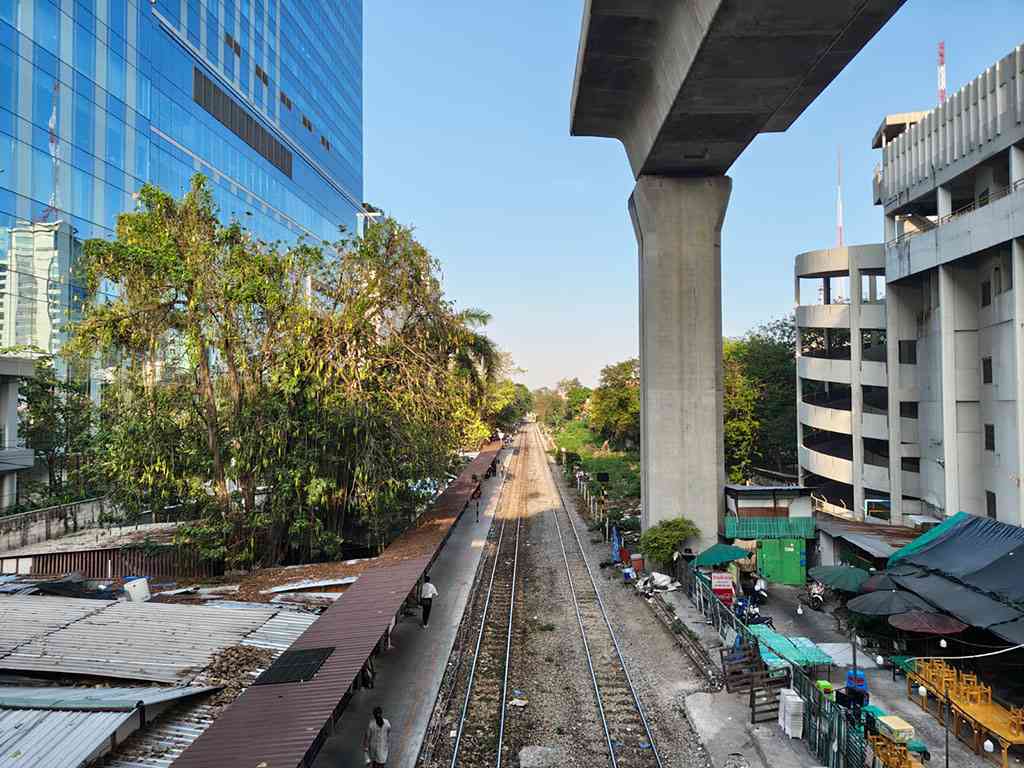
Pedestrians, vendors, scooters, and electrical cables negotiate space with a fluidity that would cause most planning manuals to shut themselves in protest. Yet the surprising part is that the system works. People slide past each other with small gestures and small smiles. Nobody appears outraged. The city moves through a constant choreography of micro-adjustments. Urban planning theory tends to assume conflict. Bangkok assumes accommodation.
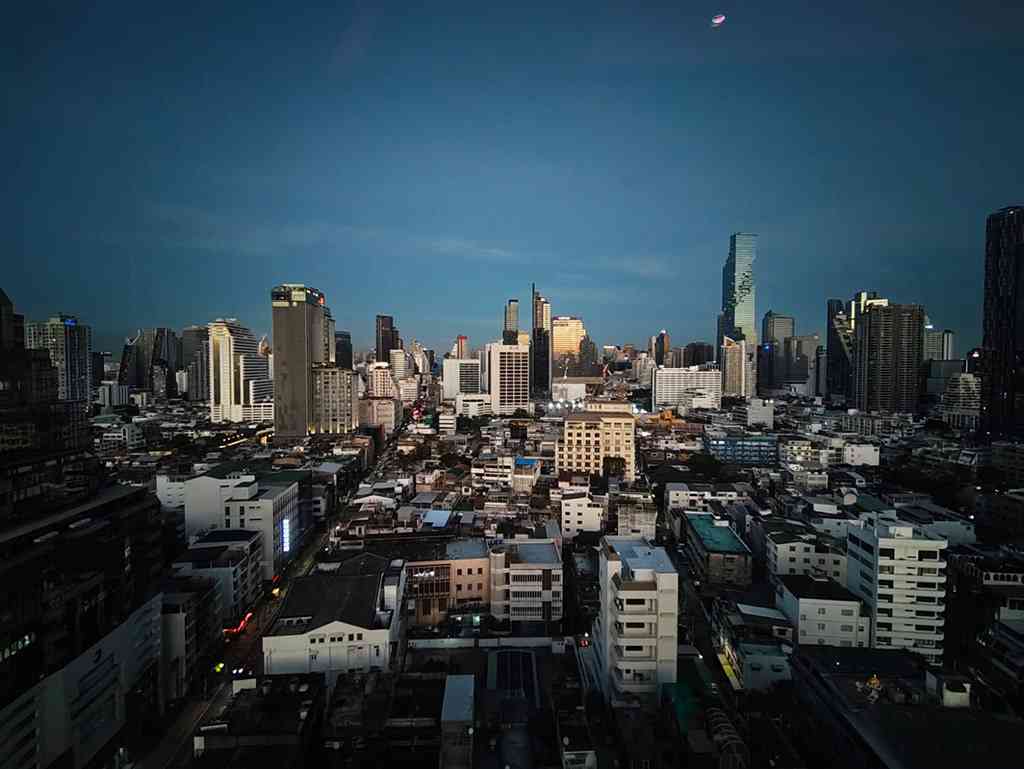
Traffic offers the next lesson. From above, Bangkok’s roads resemble a diagram of permanent congestion. Cars occupy every visible meter of asphalt. Motorbikes weave through gaps that appear to exist only in theory. Buses approach intersections with the quiet confidence of creatures that know physics is optional. At first glance it looks catastrophic. But the remarkable thing is that, somehow, it flows. Slowly, sometimes painfully, but it flows. The system resembles less a machine and more a river — constantly adjusting, splitting, merging, negotiating.
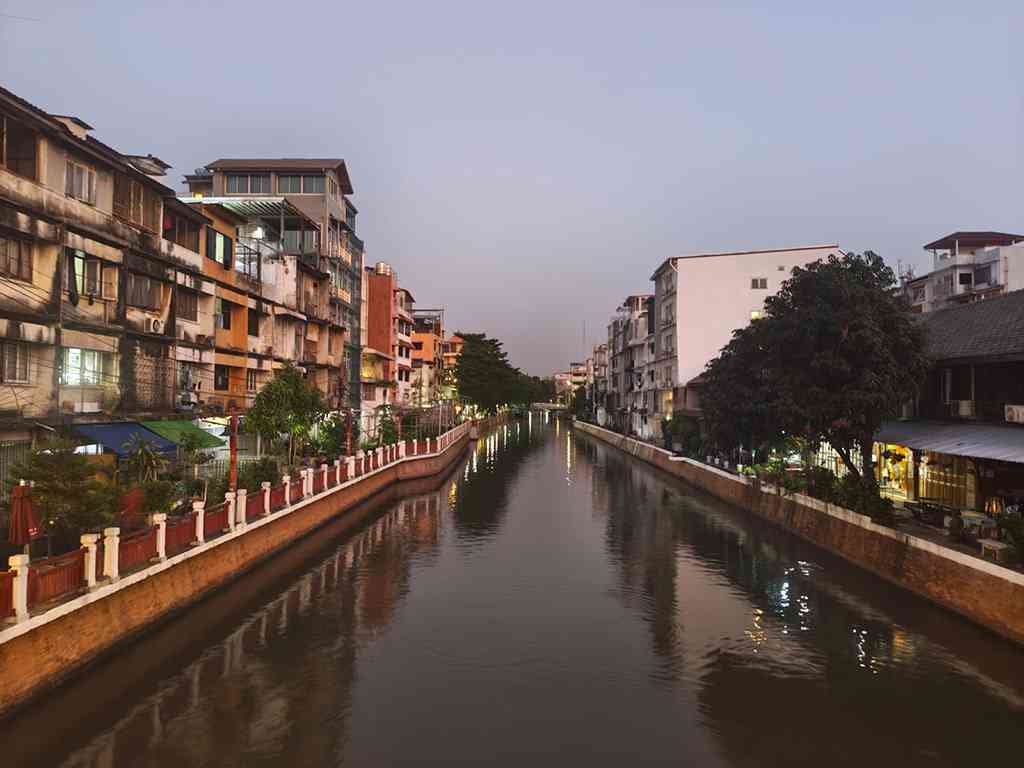
The planner begins to suspect that what appears to be chaos may in fact be a different form of order.
Public transport complicates matters further. The BTS Skytrain glides overhead with reassuring efficiency. Stations are clean, trains punctual, queues polite. For a moment the planner feels relieved. Ah yes, here is the modern megacity: rational, elevated, well organized. Then you exit the station. Immediately the city resumes its improvisation. Street vendors cluster near entrances, taxis negotiate fares, motorbike taxis offer improbable shortcuts through traffic, and somewhere nearby a canal quietly carries long-tail boats through brown water that remembers when Bangkok was primarily a city of waterways. Three transportation systems — river, road, and rail — overlap without ever fully explaining themselves to each other. And yet people get where they need to go.
The planner’s confidence weakens further when confronted with the city’s food economy. In most planning frameworks, food belongs in designated commercial zones, within buildings, preferably inspected and regulated. Bangkok politely disagrees.
Food appears everywhere: under staircases, beside office towers, in parking lots, along alleys, next to temples. Plastic stools become restaurants of remarkable culinary sophistication. A wok on a gas burner produces flavors that would justify international travel. Urban planners speak often about “mixed use.” Bangkok simply cooks.
There are, of course, deeper systems at work. Thai politeness is not merely cultural decoration; it is functional infrastructure. The famous calmness of everyday interaction smooths friction in a city of immense density. Small gestures — a nod, a wai, a slight step aside — replace confrontation. In other megacities, density often produces aggression. In Bangkok it frequently produces negotiation.
The planner begins to realize that the city’s real operating system is social rather than spatial.
Climate also plays its role in this urban education. The heat in Bangkok is not subtle. By midday the air has the consistency of soup. The planner, who once believed in long analytical walks, now moves between shade patches with the strategic awareness of a desert animal. Yet the city continues. Street vendors fan charcoal grills. Construction workers assemble yet another tower of glass and balconies. Commuters move steadily between riverboats and rail platforms. Resilience here is not heroic. It is routine.
Even the skyline reflects this layered logic. Bangkok builds upward with enthusiasm: glass towers, luxury condos, rooftop bars perched high above the Chao Phraya. Yet at their base, a spirit house quietly receives offerings of incense and orange soda. Modernity does not erase tradition. It simply builds around it.
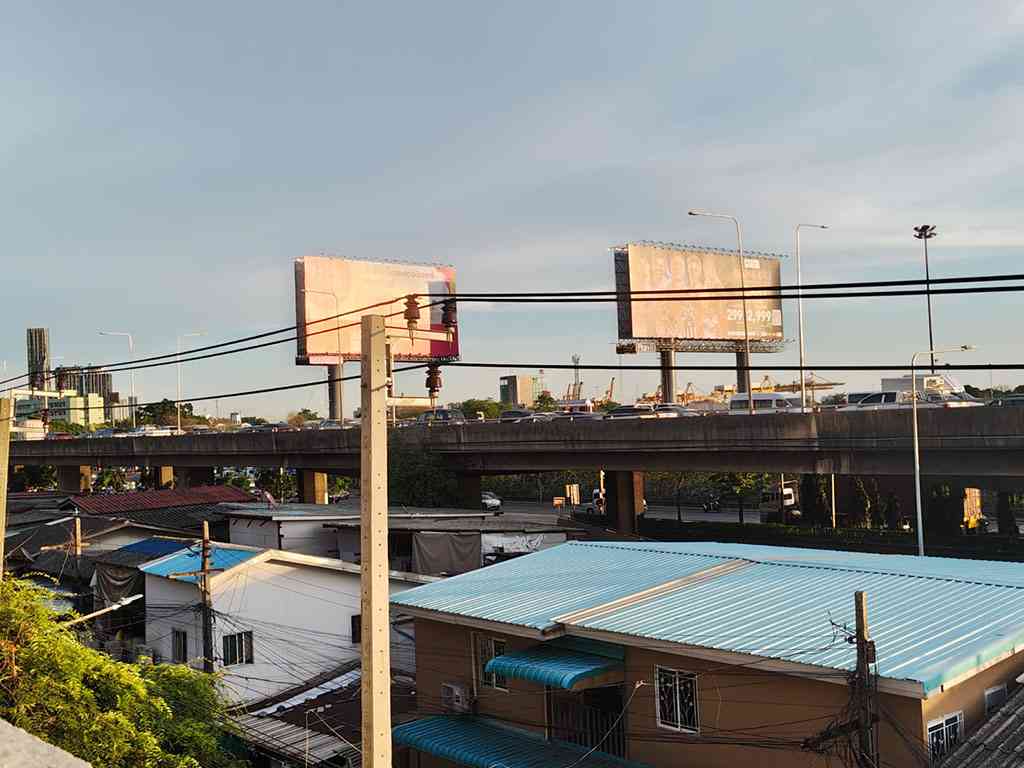
By the end of the visit, the urban planner faces an uncomfortable conclusion. Bangkok does not function because it follows the rules. It functions because its people have mastered adaptation.
Formal systems exist — roads, rail lines, zoning codes — but they are constantly adjusted by informal ones: street vendors, motorbike taxis, neighborhood negotiation, quiet social courtesy. The city is less a machine than an ecosystem. Urban planners like clean diagrams. Bangkok prefers living systems. This realization produces a strange mixture of humility and admiration. The planner arrives expecting to diagnose problems and propose improvements. Instead, the city offers a lesson in flexibility. Not every system needs to be perfectly ordered to work. Not every sidewalk must remain purely a sidewalk. And sometimes the most sophisticated urban infrastructure in a megacity is simply the ability of millions of people to move past one another with patience, good humor, and the shared understanding that, somehow, it will all work out.
Bangkok does not reject planning. It simply refuses to be entirely planned. Which, for a city of twelve million people sitting in a humid river delta, might actually be the smartest plan of all.