Why new cities can be engines of growth, symbols of ambition, and expensive disappointments all at once
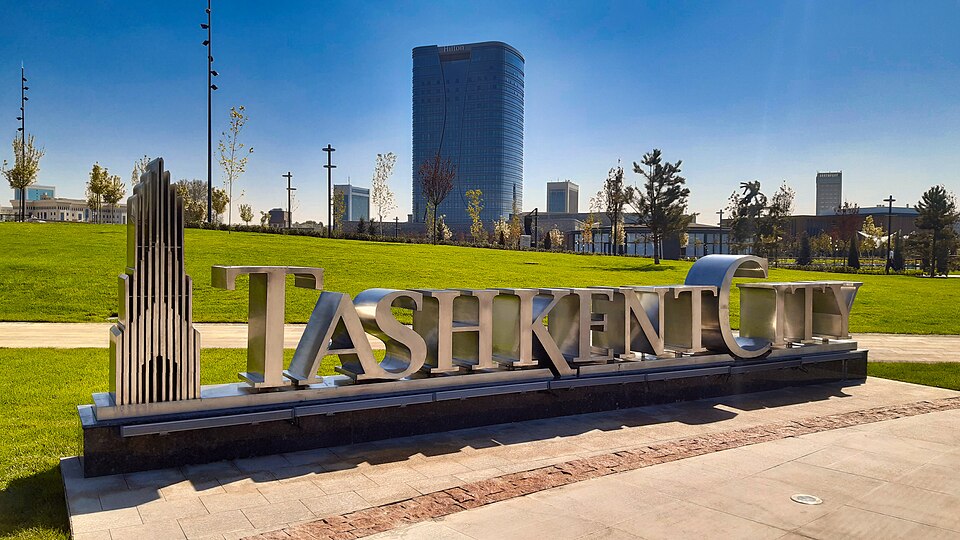
NEW Tashkent is taking shape! Recent reportings of a new city in the making in Uzbekistan present the project in the language that always surrounds new cities at birth: optimism, scale, innovation, sustainability and national confidence. It describes a 20,000-hectare expansion intended to house 2 million people and relieve pressure on Uzbekistan’s capital, while framing the scheme as a green and smart regional hub. But stripped from the usual marketing blabla it raises a profound question: when do new cities solve real urban problems, and when do they merely relocate them onto a fresh site?
The best case for new cities is not trivial. Existing capitals and metropolitan regions are often overloaded, under-serviced and increasingly exposed to climate risk. Building anew can allow governments to put in trunk infrastructure, utilities, public transport corridors, drainage, parks and public facilities in a more coordinated way than retrofitting a chaotic urban edge parcel by parcel. That is one reason the idea keeps returning. The World Bank argues that the right urban investments can strengthen essential infrastructure, unlock jobs and build more resilient, low-carbon development, while Oxford Economics notes that successful new cities often benefit from early capital deepening in housing and integrated transport. In that sense, a new city can be a planning shortcut: not a shortcut to urban life, which takes time, but a shortcut to physical order.
Yet this is exactly where the illusion begins. A city is not simply infrastructure plus land plus software. It is a dense web of jobs, institutions, habits, social mixing, informal economies and repeated daily use. Many new cities are designed as if urban life will obediently appear once roads, districts and iconic buildings are in place. Songdo in South Korea shows both the attraction and the limitation of that logic. It was conceived as a highly planned, sustainable smart city, but recent research still finds a recurring problem of underused public spaces despite their abundance and quality, and other analyses have highlighted dependence on the surrounding region and socially selective outcomes. The critique is not that Songdo failed absolutely; it is that technical sophistication did not automatically produce urban intensity. A city can be efficient on paper and still feel thin in practice.

The more successful cases show that new cities tend to work when they are not truly starting from zero. Shenzhen is often invoked because it demonstrates that spectacular success is possible, but its success rested on conditions that are difficult to replicate: proximity to Hong Kong, exceptional state backing, special economic zone status, room for experimentation, foreign investment, talent attraction and constant policy adaptation. In other words, Shenzhen was not a triumph of master planning alone. It was a triumph of location, geopolitical timing, industrial strategy and institutional flexibility. The same lesson appears, more modestly, in Sejong. Its growth was anchored by the relocation of 47 central government agencies and 16 research institutes, and South Korean evidence suggests that public-sector relocation can generate private-sector jobs and population inflows locally. But other research on Sejong also finds only mixed and temporary effects on national population redistribution, with limited long-term impact on the deeper overconcentration of Seoul. Sejong worked better as an administrative anchor than as a cure for regional inequality.

That distinction matters. New cities are most convincing when they have a real anchor from the start: a port, a major industrial platform, a government complex, a university cluster, or a position inside a larger metropolitan economy. Without that anchor, they slide toward speculation. Egypt’s New Administrative Capital is a warning. Reuters reported in early 2024 that first residents were only “trickling in,” while around 48,000 employees were commuting daily to the ministries already transferred there; at the same time, critics argued that the project was diverting resources and worsening the country’s debt burden. This is a common danger. A new city may succeed physically as a governmental enclave or real-estate venture while failing socially as an inclusive urban project. The buildings fill with officials, investors and prestige institutions, but not with the layered life that makes a city economically resilient and socially legitimate.
There is also the question of fairness. New cities are often justified as national projects, but their costs and benefits are rarely distributed evenly. Land is assembled, public money is concentrated, transport networks are redirected and administrative attention shifts toward a showcase district. If the new city mainly attracts higher-income residents or state employees, it can deepen rather than soften territorial inequality. Even financing tools that can be useful, such as land value capture, only work well when governments can manage land transparently, reinvest gains in public goods, and protect lower-income groups from displacement. WRI’s review of land value capture in developing cities stresses that governance capacity, transparent land records, integration of land and transport planning, and explicit equity goals are decisive. Otherwise, the uplift created by public investment becomes a private windfall while the wider city continues to lack basic services.
Environmental claims also deserve skepticism. New cities are now almost always sold as green, smart and climate-ready. Sometimes that is meaningful; sometimes it is branding. Putrajaya offers one of the more serious examples of environmental planning within a new administrative city, with wetlands, stormwater management, public amenities and a garden-city concept. But even there, residency has needed subsidies, reminding us that ecological design does not by itself create urban demand. Meanwhile, New Tashkent’s own masterplanning material indicates that the expansion involves converting a very large area of agricultural land. That does not automatically make the project a mistake, but it does sharpen the trade-off. A “green city” is not green simply because it has parks, solar panels or smart systems; it also has to justify its land consumption, water use, transport model and regional ecological footprint.
So where are new cities successful, and where are they not? They are most successful when they are tied to a larger urban and economic strategy rather than treated as isolated objects. They do relatively well as administrative relocations with a guaranteed institutional base, as logistics or industrial hubs with strong market access, or as metropolitan extensions that absorb real growth already coming their way. They do poorly when they are built mainly as symbols, speculative property machines or prestige landscapes detached from the labour market and daily life of the wider region. They also struggle when they are too top-down, too monocultural in land use, too dependent on cars, or too expensive for ordinary households. UN-Habitat’s guidance is relevant here: sustainable urban form depends on compactness, mixed land use and reduced travel distances. The World Bank makes a parallel point through transit-oriented development and the importance of using land values to fund inclusive mobility. Those are not stylistic preferences. They are the operating conditions of urban success.
The real test, then, is not whether a new city looks convincing in a masterplan. It is whether it can become ordinary in the best sense: a place where people of different incomes can live, work, study, move and age without heroic levels of subsidy or control. To succeed, a new city needs an economic anchor, strong institutions, patient phasing, integration with the existing metropolitan region, affordable housing, dependable public transport, transparent land governance and a willingness to let urban life evolve beyond the planner’s script. Without those conditions, new cities remain beautiful promises with weak roots. With them, they can become something far more valuable than an icon: a functioning piece of urban society. New Tashkent may yet move in either direction. The lesson from other cases is clear. Cities from scratch do not fail because ambition is misguided. They fail when ambition mistakes construction for urbanity.
Base for cover image: wikipedia.org