Why Friction Matters in the Future of Urban Life
The modern city is obsessed with comfort. Climate-controlled interiors, frictionless mobility, seamless services, ever more space per person, and an urban realm designed to remove inconvenience before it is even noticed. Comfort has become the unspoken benchmark of progress. A good city, we are told, is one that feels smooth, easy, efficient—and ideally, invisible.
Yet something strange happens along the way. The more comfortable our cities become, the more fragile, expensive, unhealthy, and oddly characterless they grow. Comfort, pursued without restraint, turns out to be deeply uncomfortable.
Space as a Sedative
The first casualty of comfort is spatial restraint. In many wealthy cities, living standards are measured in square meters per person. Apartments grow larger, offices expand, homes absorb functions that once belonged to the street, the café, the workshop, the public square. Comfort is equated with personal space, privacy, distance. But space is never neutral. More space means more materials, more land consumption, longer distances, and higher energy demand. The comfortable suburban home—quiet, spacious, detached—requires vast networks of roads, pipes, cables, parking, heating and cooling systems. Individually rational, collectively absurd.
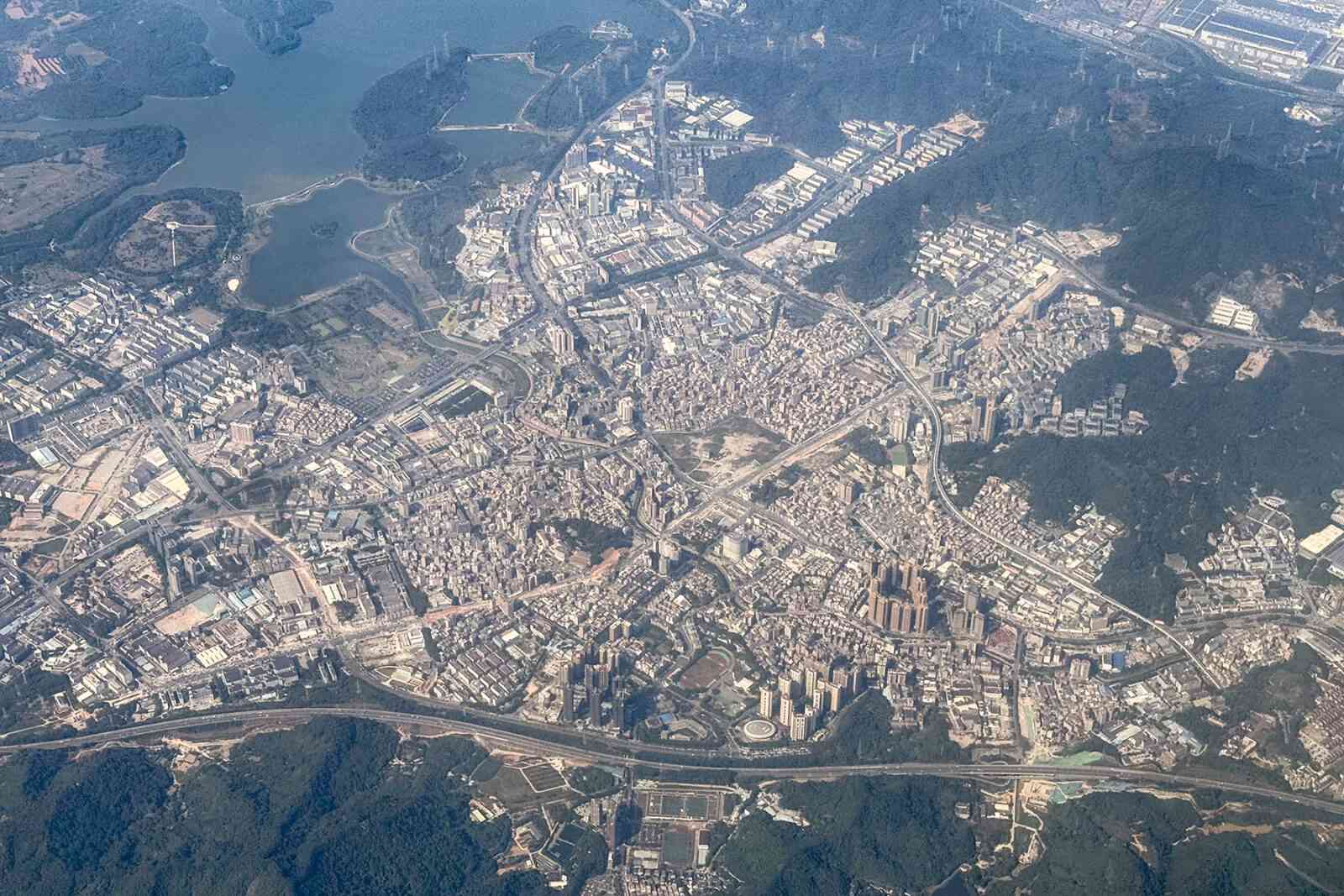
In cities like Houston, Dubai, or the outer rings of European metropolitan regions, the comfort logic produces landscapes that are technically urban but functionally immobilizing. Everyday life becomes impossible without cars. Walking is an exception, not a norm. The city stretches itself thin, spending enormous resources to maintain a spatial pattern that no longer supports social intensity or ecological balance.
Comfort here is not just wasteful—it is anesthetic. It dulls the sense of proportion.
Energy as Background Noise
Nowhere is the cost of comfort more obvious than in energy use. Heating, cooling, lighting, elevators, escalators, data centers, refrigeration, air filtration—most of it designed to eliminate minor discomforts that humans tolerated, or even relied on, for most of their history. The uncomfortable truth is that many cities now consume extraordinary amounts of energy to maintain conditions that are biologically unnecessary. Offices cooled to 20°C in summer, homes heated uniformly in winter, sealed buildings that require constant mechanical intervention just to remain habitable.
Singapore is often praised as a hyper-efficient city, yet its indoor environments demand year-round air conditioning, turning the city into an energy-intensive bubble in a tropical climate. Phoenix grows outward under the promise that air conditioning can conquer the desert. These cities work—until energy becomes scarce, expensive, or politically contested.
Comfort assumes stability. Cities rarely get that luxury.
The Sedentary City and the Sick Body
Comfort also reshapes bodies. When cities are designed to minimize effort, movement disappears from daily life. Elevators replace stairs, cars replace walking, delivery apps replace errands, remote work replaces commuting. Convenience accumulates, quietly. The results are measurable: rising obesity, cardiovascular disease, diabetes, mental health challenges. Public health systems struggle with conditions that are not caused by scarcity, but by excess ease.
Contrast this with cities where mild discomfort is built into everyday routines. In Tokyo, walking and public transport are unavoidable. In Lisbon, hills demand physical engagement. In Copenhagen, cycling is not a lifestyle choice but an infrastructural default. These cities are not comfortable in the narrow sense—but they are healthier.
Discomfort, in this context, is not punishment. It is calibration.
Infrastructure as Overcompensation
To sustain comfort, cities build complexity. Layers of infrastructure pile up to compensate for spatial excess, energy dependence, and behavioral inertia. More roads to fix congestion caused by long distances. More utilities to serve oversized buildings. More digital systems to manage physical inefficiency. The result is a city that becomes increasingly difficult to govern. Infrastructure costs rise faster than public budgets. Maintenance backlogs grow. Resilience declines.
In many North American and European cities, infrastructure systems built for peak comfort are now financially unsustainable. Water networks designed for low-density expansion leak and decay. Roads crumble under maintenance costs that outpace tax revenue. The city becomes a machine too complex to fix without massive intervention.
Comfort creates obligations that last decades. Cities inherit them long after the initial promise fades.
Losing the Edge
There is another, less measurable loss: character. Cities shaped by comfort tend toward smoothness. Rough edges are eliminated. Uses are separated. Regulations tighten. Everything is designed to function predictably. The result is urban space that feels complete, finished—and oddly forgettable. The quirky shop disappears because rent is too high. The informal use is regulated out of existence. The unfinished building, the adaptive reuse, the improvised public space—all casualties of a city that prefers control over spontaneity.
René Boer’s book The Smooth City describes this process as one of integration without friction: diversity packaged, differences managed, conflict neutralized. The city becomes inclusive, but also sanitized. The uncomfortable city goes further. It suggests that friction itself is valuable. That a city without discomfort loses its capacity to surprise, challenge, and evolve. Berlin’s appeal after reunification was not comfort, but openness and incompleteness. Naples thrives not because it is easy, but because it is intense. Even New York’s creative eras were born from density, tension, and constraint—not from abundance.
Cities need edges. Comfort sands them down.
Comfort and Cultural Homogeneity
The logic of comfort extends beyond physical space into social life. We increasingly expect cultures to integrate smoothly, differences to align neatly, conflict to dissolve through good design and policy. But societies, like cities, are not machines. Cultural differences are not bugs to be fixed. They are normal, persistent, and sometimes uncomfortable.
When cities aim for total social smoothness, they often suppress difference rather than engage with it. Public space becomes scripted. Behavior is regulated to avoid friction. Controversy is managed out of view. True urban coexistence is not comfortable. It requires tolerance for noise, disagreement, ambiguity, and contradiction. It demands social muscles that atrophy when everything is designed to feel easy.
The uncomfortable city does not promise harmony. It offers something more realistic: the capacity to live with difference without needing to erase it.
Built for Discomfort
Humans are not made for comfort. Biologically, psychologically, socially—we evolved to respond to challenge. Mild stress keeps bodies healthy. Effort sharpens attention. Uncertainty fosters creativity. Cities that remove all discomfort do not liberate their inhabitants. They weaken them.
This does not mean celebrating hardship or romanticizing deprivation. The uncomfortable city is not about suffering. It is about resisting the illusion that ease equals quality. A good city makes you walk a little. It exposes you to others. It forces small negotiations. It asks you to adapt.
Discomfort, in this sense, is not the opposite of care. It is a form of care.
A Different Urban Ideal
The uncomfortable city is compact rather than spacious. Active rather than sedentary. Robust rather than optimized. Diverse rather than smooth. It accepts inefficiency where it produces resilience, and friction where it creates vitality. It is not a city of luxury, but of capability. As climate pressure grows, energy becomes constrained, and social complexity increases, the comfort-maximizing city will struggle. The uncomfortable city—leaner, tougher, more adaptable—may prove better suited to the century ahead.
We may still long for comfort. That desire is human. But cities, like people, should not be designed around our weakest instincts.
They should make us a little uncomfortable.
Post Scriptum: The Uncomfortable City in an Uncomfortable World
This debate about comfort is no longer abstract. It sits squarely in the context of a rapidly shifting global order. At the World Economic Forum in Davos this week, Canadian Prime Minister Mark Carney sketched a world defined less by stability and optimization than by volatility, fragmentation, and structural stress—geopolitical, economic, climatic. A world in which assumptions about endless growth, cheap energy, frictionless globalization, and permanent security no longer hold. It was not a speech about cities, but it might as well have been.
Because the comfortable city is a product of the old order: predictable supply chains, abundant energy, manageable risks, and the belief that complexity could always be engineered away. The new world Carney described is different. It is more contested, more uneven, more uncertain—and fundamentally less comfortable. In such a world, cities optimized for ease become liabilities. Systems built for maximum comfort struggle when shocks arrive. Spatial excess becomes unaffordable. Energy intensity becomes dangerous. Over-complex infrastructure becomes brittle. Social smoothness gives way to tension that cities are no longer trained to absorb.
The uncomfortable city, by contrast, is not an anachronism—it is preparation. It assumes constraint rather than abundance. It trains bodies, systems, and societies to cope with effort, friction, and change. It accepts that discomfort is not a temporary failure to be fixed, but a permanent condition to be managed. In an uncomfortable world, resilience does not come from making everything easier. It comes from learning how to live with difficulty—without breaking, retreating, or denying it.
The uncomfortable city is not a retreat from progress. It is an adjustment to reality.
Cover image created with the help of AI tools.