What Western Planning Misses About Urban Life in Africa
For decades, African cities have been treated as incomplete drafts of somewhere else. They are measured against Paris, London, Singapore or Dubai, and judged by how closely they resemble them. When they fall short, the diagnosis is familiar: weak institutions, insufficient capacity, lack of enforcement. The proposed cure is just as predictable. Import international best practice. Hire global consultants. Apply models that have already “worked” elsewhere.
This logic rests on a quiet assumption: that there is a correct way for a city to function, and that this way has already been discovered in the West. It also assumes that Africa can be planned as a category.
But there is no African city. Accra is not Addis Ababa. Dakar does not behave like Dar es Salaam. A port city shaped by trade, a highland capital shaped by administration, a mining town shaped by extraction, or a border city shaped by logistics all produce radically different urban patterns. Climate, economy, culture, land tenure and social organisation vary not just between countries, but between neighbourhoods. Treating “Africa” as a single planning context already guarantees failure.
Cities are not objects. They are systems of behaviour. And many African cities behave in ways that do not fit the diagram.
When the Plan Meets the Ground
I have watched polished masterplans unravel not because they were poorly drawn, but because they were based on the wrong assumptions. Transport routes that look efficient on paper fail because they ignore where people actually live and work. Housing typologies designed for nuclear families struggle in cities where households are extended, fluid and economically interdependent. Infrastructure systems designed for uninterrupted provision break down under fiscal realities that make maintenance more challenging than construction.
The result is rarely dramatic collapse. Instead, projects underperform. Buildings are repurposed. Streets are reoccupied. Informality creeps back in, not as resistance, but as correction. The city adjusts itself.
What these plans often miss is not some abstract “African difference”, but the specific, local logics that already structure urban life. Informal economies may account for the majority of employment in one city and coexist with strong formal sectors in another. Climate may demand dense shade and narrow streets in one context, and dispersed settlement in another. Transport patterns differ radically between coastal trade hubs, landlocked capitals and regional market towns. None of this is chaos. It is adaptation.
The Hubris of Arrival
There is a particular kind of Western confidence that arrives with the consultant. It comes in the language of delivery, benchmarks, and global standards. It assumes that complexity is a technical problem, and that local deviation is simply underdevelopment waiting to be corrected. Too often, African cities are approached as if they were empty canvases rather than lived systems, as if the primary challenge were a lack of planning rather than a mismatch of planning cultures.
Yet the story is not one-sided. Western hubris would not travel so far if it were not welcomed. Local decision-makers are often equally invested in the aesthetics of imported success. A skyline is not just a building typology; it is a political symbol. A “mini-Dubai” is not merely an urban form; it is a performance of modernity. The glitz of Western and Gulf models offers leaders something that local incrementalism does not: immediate visibility, global recognition, and the appearance of having arrived. In this bargain, consultants deliver aspiration, and elites purchase legitimacy. The city itself is left to adapt around the result.
Lagos and the Intelligence of Improvisation
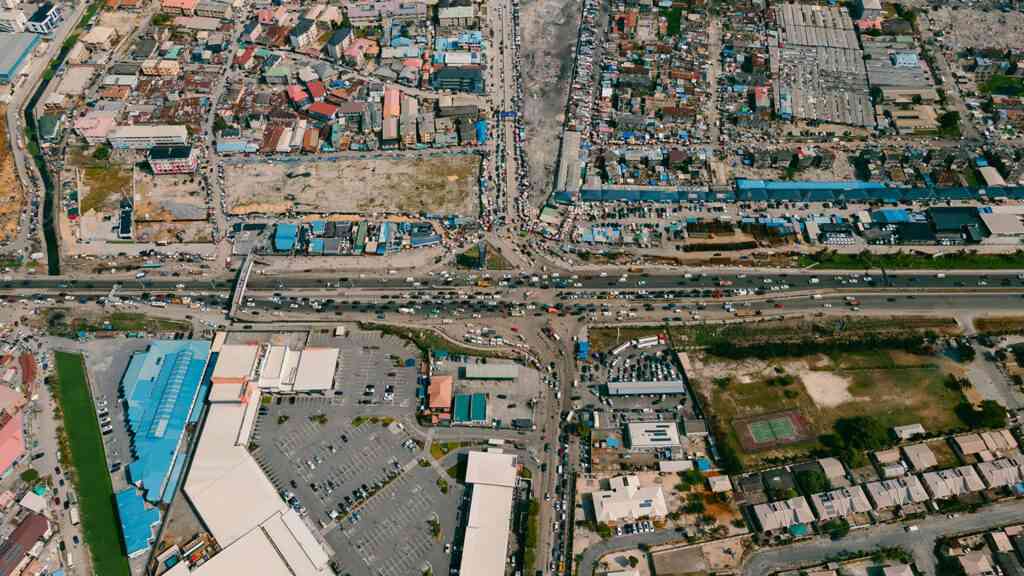
Lagos is frequently cited as a warning: too big, too fast, too informal. Yet it is also one of the clearest examples of an urban system that works because it adapts continuously. Its informal transport network — danfos, minibuses, motorcycles, ferries — moves millions of people every day across a fragmented, congested metropolis. Routes change in response to demand. Vehicles double as sources of employment. Payment systems are flexible. Information flows through drivers, conductors and passengers.
Attempts to replace this system wholesale with rigid, formal alternatives have repeatedly underestimated how deeply mobility is embedded in livelihoods and daily negotiation. Bus Rapid Transit corridors function where they align with existing patterns, and struggle where they attempt to overwrite them. The lesson is not that Lagos should remain informal forever, but that any formalisation must grow out of what already works. What succeeds in Lagos would fail in Kigali. And that is precisely the point.
Ground, Land, and the Limits of Ownership Tools
Nowhere is the mismatch between imported models and local reality more evident than in land. Western planning assumes land is legible: surveyed, titled, registered, enforceable through courts and bureaucracies. Zoning depends on the premise that ownership is clear, and that regulation is culturally and institutionally enforceable.
In many African cities, land does not operate through these tools, because for much of history it did not need to. Tenure has often been customary, layered, negotiated through community authority rather than formal documentation. Possession may matter more than title. Social recognition may matter more than cadastral maps. Multiple claims can coexist, not as dysfunction, but as a different legal-cultural order.
The rapid acceleration of urban land markets has made these systems newly contested, but the institutional infrastructure of enforceability has not always kept pace. Planning frameworks imported from contexts of strong legal control often collapse when the state cannot enforce them, or when enforcement itself lacks legitimacy. The ground is not neutral. It is political, social, and deeply contested. Any urbanism that treats land as a technical input rather than the core arena of negotiation is destined to fail.
Housing, Informality and the Limits of Compliance
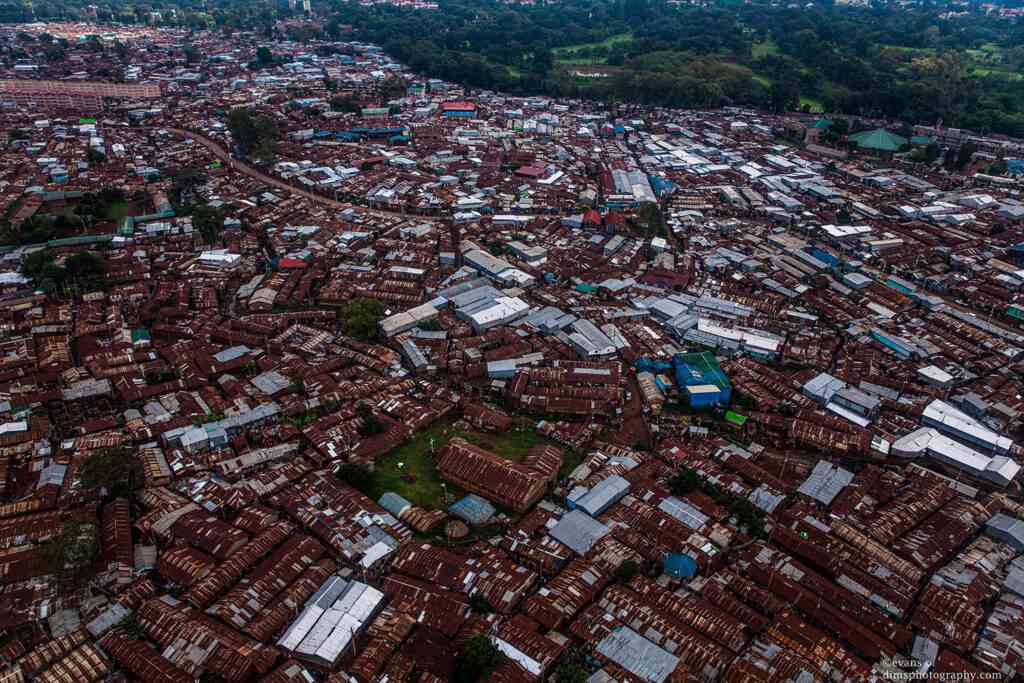
In Nairobi, formal housing developments often remain partially empty while informal settlements densify nearby. This is commonly framed as a failure of compliance or affordability. In reality, it is a failure of fit. Formal housing assumes stable incomes, long-term mortgages, fixed household sizes and predictable employment. For many urban residents, income is volatile, households change, and proximity to informal work matters more than formal tenure.
Informal housing persists not because people reject standards, but because standards reject people. In other cities, including parts of North Africa, the reverse occurs: formally built housing is occupied but gradually informalised as families extend, subdivide and adapt spaces to their needs. The buildings survive. The plans do not.
This is where the debate around basic services often becomes misleading. Cities are rightly expected to provide water, sanitation, housing and mobility. But too often, service delivery is tied to full formal compliance, as if legality must come before access. In many African cities, this logic has produced exclusion rather than improvement. Entire neighbourhoods remain unserved not because cities lack the technical ability to provide services, but because planning frameworks define legitimacy so narrowly that large parts of the population fall outside it.
Residents respond by self-provisioning water, energy, sanitation and transport, building parallel systems not out of defiance, but necessity. When planners dismiss these systems as failures instead of engaging with them as starting points, they confuse the goal of service delivery with a particular method of delivering it.
The Seduction of the New City
Across the continent, new satellite cities promise escape from these complexities. From coastal enclaves like Eko Atlantic to inland projects such as Konza Technopolis or Diamniadio, they offer a vision of control: wide roads, glass towers, mono-functional zoning and global branding. These developments are marketed as future-proof and investment-ready. Some will succeed in limited ways. Many will not.
Where they struggle, it is often because they are designed for an imagined population: formally employed, car-owning, financially stable, globally mobile. They are less cities than real estate strategies, disconnected from surrounding labour markets and social networks. They fit the diagram. They do not fit the city.

The Soft Power of “Best Practice”
Western urbanism travels with extraordinary authority. It arrives not only as a technical package, but as a cultural promise. The foreign consultant does not simply bring expertise; they bring a worldview, an aesthetic, and an implicit hierarchy of what a successful city is supposed to look like. Wide boulevards, central business districts, glass towers, zoning purity, regulated public space — these are treated not as context-specific outcomes of Western history, but as universal markers of modernity.
This is the deeper problem with “international best practice.” It is rarely neutral. It is soft power in built form. In many African contexts, Western urbanism is not imported because it works, but because it signals. It signals competence to donors, seriousness to investors, and modernity to the global gaze. A skyline becomes a diplomatic gesture. A masterplan becomes a performance of control. A “world-class city” narrative becomes a political asset. The consultant, knowingly or not, becomes part of this theatre. Plans are packaged for presentations, not for neighbourhoods. They are designed to be legible to global capital rather than to local life. Their success is measured in renderings, not in service delivery. In this sense, Western planning often functions less as a tool for cities than as a branding exercise for regimes.
But it would be too easy to blame outsiders alone. Western hubris finds fertile ground because local elites often want the same thing. The “mini-Dubai” is not an accident; it is an aspiration. Imported urbanism offers decision-makers immediate visibility and symbolic success. Incremental upgrading does not photograph well. Informal market infrastructure does not impress visiting delegations. A drainage project does not look like progress in the way a skyline does.
The result is a dangerous convergence of interests. Consultants deliver globally recognisable form. Leaders purchase the appearance of arrival. And the city’s majority — informal workers, renters, migrants, residents without tenure — are left outside the frame, quite literally unplanned for. Soft power is not only Western. It is internalised. The most lasting legacy of colonial and postcolonial urbanism may not be infrastructure, but the idea that legitimacy comes from imitation.
Toward Cities That Make Sense Where They Are
If there is an African urbanism worth discussing, it is not a single model, style or aesthetic. It is not a new diagram to replace an old one. It is an approach rooted in specificity, in humility, and in the refusal to treat difference as deficiency.
It begins with the recognition that cities on the continent are not failing versions of Western cities, but different systems altogether, shaped by their own economic realities, household structures, governance traditions, ecological pressures and histories of land. Planning, therefore, cannot be a matter of importing form. It must be a matter of engaging function. Such an urbanism would take informality seriously, not as a temporary pathology to be erased, but as a mode of urban production that has emerged under real constraints. It would ask how informal transport networks can be supported rather than replaced, how informal markets can be serviced rather than criminalised, and how incremental housing can be upgraded without destroying the livelihoods embedded within it. It would also begin from the ground, quite literally. Land in many African cities is not simply a commodity mapped through cadastral certainty. It is negotiated, layered, and socially governed. Any planning framework that assumes enforceability without legitimacy will collapse. A context-driven urbanism would therefore treat land not as a technical input, but as the central political arena of the city — and would build institutions of mediation rather than fantasies of control. Most importantly, it would redefine what urban success looks like. Not a skyline, but water. Not an exportable masterplan, but sanitation. Not zoning purity, but access. Not glossy enclaves, but functioning neighbourhoods. The city that works may not look impressive from above, but it is impressive in the only way that matters: it sustains life.
This requires a shift in the role of the planner. The planner cannot remain a translator of foreign norms or an enforcer of impossible standards. The planner must become an interpreter of local systems, a broker between formal and informal, a builder of trust, and a designer of pathways rather than endpoints. There is no African city. There are cities in Africa — coastal and inland, dense and dispersed, wealthy and struggling, formal and negotiated — each shaped by its own conditions and possibilities. They do not need to fit the diagram to succeed.
They need to make sense where they are. And perhaps the most radical idea is this: African cities do not need to catch up to anyone. They need to become more fully themselves.
Thank you Sandra Tchinianga of PlanAfrica for the inspiration to this essay.
Cover image reated with the help of AI tools