The current Iran war is not only a geopolitical rupture; it is also a laboratory for understanding how cities, economies, and societies behave under conditions of sustained, technologically advanced, and ambiguous conflict. For urbanists and for small countries that are often more exposed, more networked, and less buffered, the lessons are unusually stark. They point to a future where war is less about frontlines and more about systems: infrastructure, perception, and everyday life.
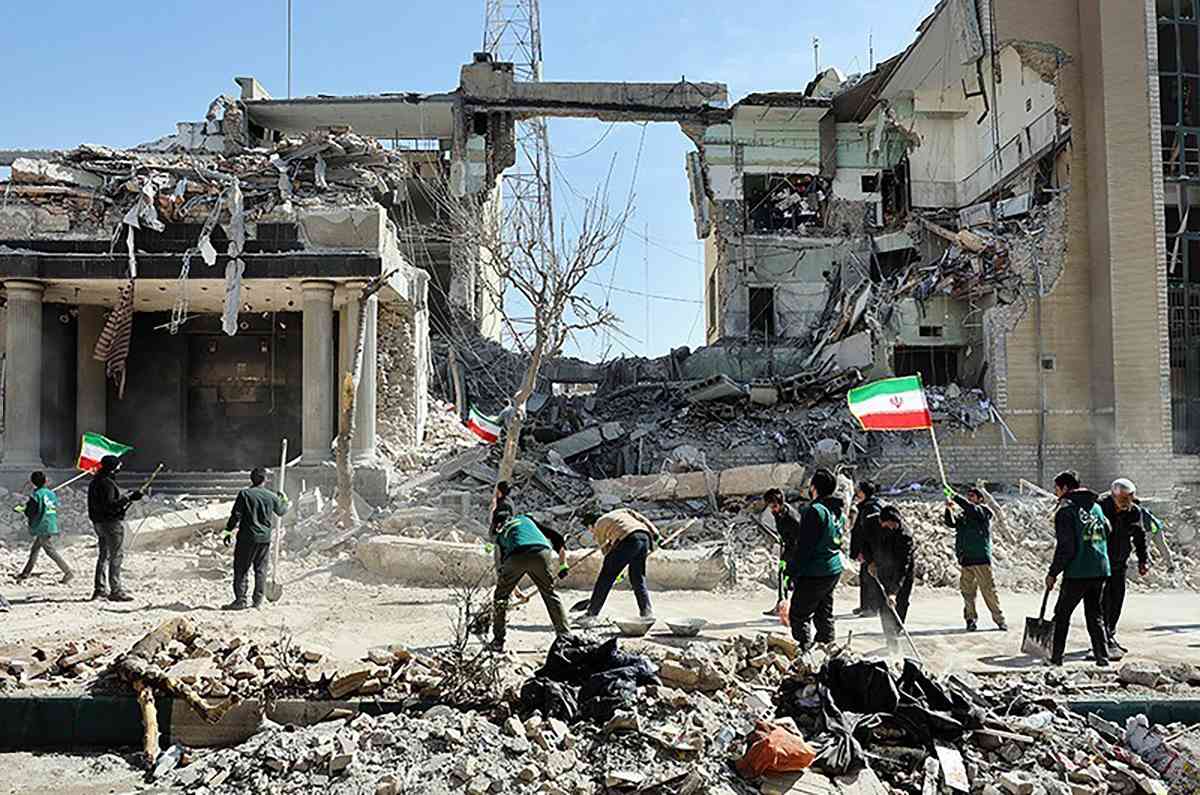
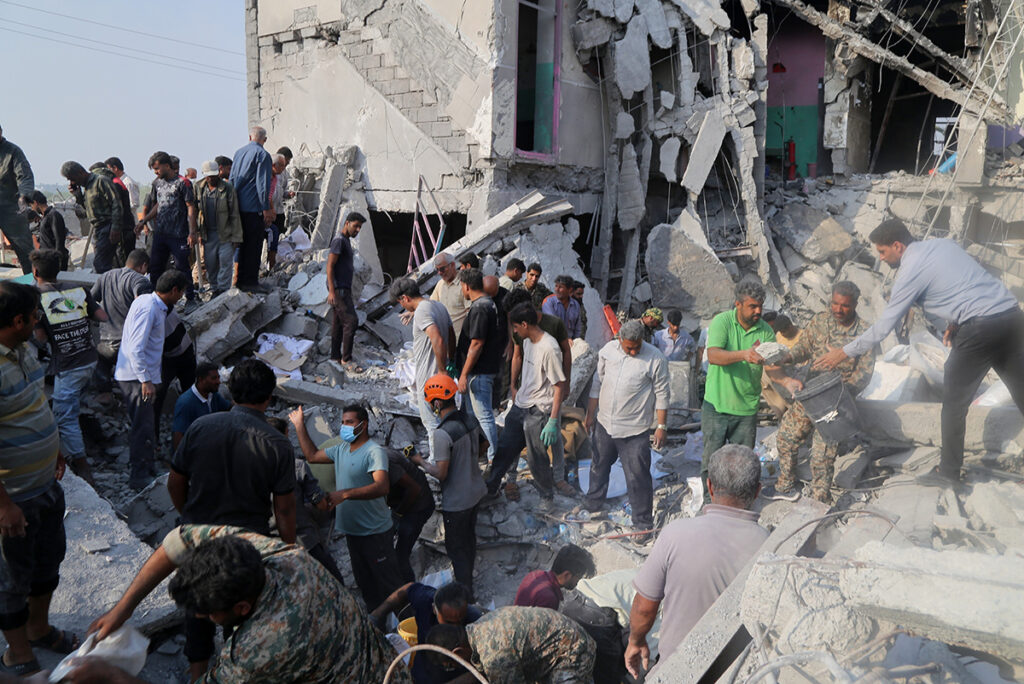
One of the clearest lessons is that the contemporary city is no longer a backdrop to war – it is the battlefield itself. In Iran, thousands of residential units, schools, medical facilities, and commercial spaces have been directly targeted or damaged, often because they sit near military or dual-use infrastructure . This blurring of civilian and military space is not incidental; it reflects a structural shift. Military assets are embedded within urban regions, and urban systems such as energy grids, ports, communication networks are themselves strategic targets. The implication for future urban development is uncomfortable: resilience can no longer be an afterthought or a layer added to otherwise efficient systems. Cities must be designed with redundancy, decentralization, and compartmentalization, accepting that disruption is not an exception but a recurring condition.
source: wikipedia.org
For small countries, especially those integrated into global networks, the lesson is even sharper. The Iran war demonstrates how conflicts propagate through systems rather than territories. Oil markets, shipping routes, and financial flows are disrupted far beyond the immediate geography of the war . Economic exposure becomes a vulnerability. A small country with a highly optimized, just-in-time economy may find itself more fragile than a larger, less efficient one. The future urban economy, therefore, may need to rebalance away from pure efficiency toward strategic resilience: diversified supply chains, local production capacity in critical sectors, and the ability to operate in partial isolation.
At the same time, the war reveals the growing importance of asymmetric strategies, not only militarily but economically and spatially. Iran has relied heavily on drones, missiles, cyber operations, and proxy networks to impose costs on stronger adversaries . This logic translates directly into urban and national strategy. Smaller actors cannot compete symmetrically, so they shape the environment instead. In urban terms, this suggests that cities and small states will increasingly invest in flexibility, adaptability, and networked responses rather than fixed, monumental infrastructure. The city becomes less a stable object and more a dynamic system capable of absorbing shocks and reconfiguring itself.
Public image has emerged as another battlefield, perhaps as important as physical territory. The Iran war is characterized by conflicting narratives, strategic ambiguity, and active information warfare . Communication blackouts, digital manipulation, and competing claims about events shape global perception as much as the events themselves. For cities and small countries, this is a profound shift. Reputation of safety, stability, openness can change rapidly and with real economic consequences, affecting investment, tourism, and diplomatic positioning. Urban governance must therefore include not only physical planning but narrative management: transparency, rapid communication, and the ability to maintain credibility under pressure.
This extends to the internal dimension of public trust. Conflicts expose fractures within states, as seen in Iraq where political and military structures are deeply entangled and contested . For cities, this suggests that social cohesion is a form of infrastructure. A city that functions under stress is not just one with strong buildings, but one where institutions retain legitimacy and where citizens continue to cooperate. Urban planning, in this sense, becomes inseparable from governance and civic culture.
Perhaps the most unsettling lesson concerns personal protection. The Iran war shows that precision warfare does not eliminate civilian risk; it redistributes it unpredictably. Advanced weapons, sometimes operating on imperfect data, have struck schools and residential neighborhoods . Meanwhile, underground military facilities embedded near cities increase the likelihood that civilians live above or beside targets . The traditional model of civil defense – clear separation between safe and unsafe zones – no longer holds.
For individuals, this implies a shift toward everyday resilience: access to shelters, decentralized energy and water systems, and the ability to function during communication outages. For urban design, it suggests integrating protective measures into ordinary life rather than isolating them. Buildings, public spaces, and infrastructure must double as protective systems without becoming overtly militarized environments. This is a delicate balance, especially for open, democratic societies.
Finally, the war underscores the increasing fusion of physical and digital conflict. Cyber operations have targeted communication networks, financial systems, and infrastructure alongside conventional strikes . Cities, as dense concentrations of data and connectivity, are particularly exposed. The future of urban resilience will therefore depend as much on cybersecurity and digital redundancy as on physical design.
Taken together, these lessons point to a different model of urbanism. Not the city as an optimized machine for growth, but the city as a resilient organism in a volatile world. For small countries, the challenge is even more acute: to remain open and connected while developing the capacity to withstand shocks that originate far beyond their borders.
The Iran war does not offer a blueprint, but it does clarify the direction of travel. Conflict is becoming more distributed, more ambiguous, and more embedded in everyday life. Cities that recognize this early and adapt their economic structures, public narratives, and protective systems accordingly will not be immune, but they may remain functional. And in the coming decades, functionality under stress may be the most important measure of urban success.
cover image: destoryed housing complex in Tehran – Iran. source: wikipedia.org