The next phase of climate planning is not simply about cooling cities. It is about redistributing growth, resources and opportunity before crisis does it for us.
The familiar climate map is beginning to move.
As the recent Financieele Dagblad article “Grote delen van de wereld krijgen nieuw klimaattype” describes, places that we associate with one climate may belong to another before the end of this century. Warsaw could fall into the same broad climate category as present-day Miami, much of Sweden could acquire something closer to the climate of today’s Netherlands, while Alicante could begin to resemble Alexandria.
These comparisons should not be read too literally. Warsaw will not suddenly acquire Miami’s palm trees, ocean currents or hurricane season. But the underlying shift is profound. Climate classifications describe the combinations of heat, rainfall and seasonality on which ecosystems, agriculture and settlements depend. According to the research behind the new Köppen-Geiger maps, between 5% and 13% of the world’s land surface could move into a different major climate class by the end of the century, depending on emissions.
A climate map can change within decades. A city cannot. Its sewers, reservoirs, housing, roads, ports and power systems were built for conditions assumed to remain broadly stable for a century or more. Climate change therefore creates a new type of urban mismatch: fixed settlements embedded in moving environmental systems.
The climate map is moving creating a new reality for each city. To better understand what that reality will be like, the map shows what climate the city would have to be located to match its climate of 2100 with today’s climate reality.
Our response remains surprisingly small in comparison. We talk about trees, shade, reflective roofs, water squares and air-conditioning. All are useful, and many are urgently needed, but they treat climate change mainly as a problem of outdoor comfort and building performance. The larger challenge is that climate change is altering the economic and ecological geography on which cities depend. It changes where water is available, where food can be produced, where infrastructure can be insured, where outdoor labour remains possible and, ultimately, where population growth can responsibly be accommodated.
The real task is not merely to make each city more resilient. It is to make the entire system of cities adaptable.
Existing cities need conversion, not decoration
Most existing cities will remain inhabited. The enormous cultural, social and economic value accumulated in London, Cairo, Jakarta or Lagos cannot simply be moved to a safer location. Nor should climate adaptation become a technical excuse for displacing poorer communities from valuable urban land.
But keeping cities does not mean keeping every urban function in its present place.
Cities should begin to plan for climate conversion: the deliberate transformation from the climate for which they were built to the climate they are likely to experience. A northern European city moving from a cold continental climate towards a temperate one will need more than different trees. Its housing may face overheating rather than heat loss; its drainage system must handle more intense rainfall; familiar construction materials will weather differently; winter economies will weaken while outdoor seasons become longer; new insects, plant diseases and public-health risks will appear.
Historic climate analogues can help. If a city is moving towards the climate of another region, it should study not only that region’s architecture but also its operating culture: working hours, water management, planting regimes, food storage, maintenance cycles and public-health systems. But an analogue is a starting point, not a template. Future Warsaw will still have Warsaw’s soils, institutions, street pattern and winter daylight. It may experience Miami-like heat without Miami’s ecosystem or accumulated knowledge.
This conversion also requires subtraction. Continuing to add housing, hospitals and critical infrastructure to floodplains, eroding coasts, wildfire interfaces or water-stressed urban fringes turns a foreseeable hazard into a permanent public liability. Adaptation must therefore include selective de-intensification: allowing some areas to change from residential neighbourhoods into wetlands, water-storage landscapes, seasonal uses or energy infrastructure.
Retreat is usually presented as an admission of defeat. More usefully, it can be understood as a development programme with two locations: an area from which risk is gradually removed and a receiving area where new homes, services and economic opportunities are created. Planning one without the other produces either abandonment or resistance.
The vulnerable city is often somewhere else
A city may have excellent flood defences and still fail because a distant harvest collapses, a river used for cooling power stations runs too warm, a port closes, fertiliser prices rise or an electricity interconnector is interrupted.
This is the blind spot in most urban climate plans. They measure the exposure of buildings but not the exposure of the systems that keep those buildings inhabited.
Research projects that between 1.7 and 2.4 billion urban residents could face water scarcity by 2050. The answer cannot simply be to find a more distant river or build another desalination plant. These solutions transfer costs into other catchments, ecosystems and energy systems. Every metropolitan region needs a water balance that distinguishes between renewable supply, recycled water and the depletion of inherited reserves. Urban growth should be limited by the first two, not sustained indefinitely by the third.
Food requires a similar shift. Urban food policy has often meant community gardens, rooftop greenhouses and farmers’ markets. These have social and nutritional value, but they will not feed metropolitan populations. A serious urban food strategy must address the city’s wider foodshed: agricultural soils, processing facilities, wholesale markets, cold storage, rail and port access, fertiliser supply and contracts with producers in different climate regions.
Climate change increases the risk that major agricultural regions experience shocks at the same time. A resilient city should therefore avoid dependence on a single breadbasket, transport corridor or production system. It needs diversified supply, strategic storage and the capacity to substitute between products. Controlled-environment agriculture may secure vegetables and other perishables, but growing staple calories in energy-intensive urban warehouses is unlikely to replace productive landscapes. The more important task is to protect fertile land around cities from being consumed by low-density expansion and to reconnect urban waste streams with agricultural production by recovering water and nutrients.
The objective is not urban self-sufficiency. Few large cities have ever been self-sufficient. It is urban redundancy: several ways to obtain water, food, energy and essential materials, combined with the capacity to reduce demand when one source fails. The FAO’s work on city-region food systems points in this direction, treating food resilience as a relationship between the city, its region and wider networks rather than as an activity confined within municipal boundaries.
Where should the next cities grow?
We will not move the existing urban world, but we can still influence where the next thirty years of investment and population growth occur. This is where climate policy and spatial planning have barely begun to meet.
The best locations for future growth are not simply the coolest places on the map. Nor should northern land automatically be considered empty and available. Permafrost can thaw, forests can burn, soils may be poor, ecosystems fragile and infrastructure extremely costly. Many apparently available territories are inhabited cultural landscapes, including lands with longstanding Indigenous rights that cannot be treated as a reserve for future urbanisation.
A climate-receiving city needs headroom across several systems at once: manageable future heat, reliable renewable water, limited flood and wildfire exposure, access to productive soils without building over them, dependable low-carbon energy, more than one transport connection and institutions capable of managing rapid change. Ecological capacity and existing land rights must be treated as fundamental conditions, not obstacles to be resolved after investment decisions have been made.
In practice, this often points towards strengthening existing medium-sized inland cities in temperate regions rather than creating spectacular new megacities on arid plains or exposed coastlines. Parts of the Great Lakes region, northern and Baltic Europe, and selected highland areas may be able to accommodate more people, provided local water, ecological and infrastructure conditions support it. These are not predetermined climate winners, but potential receiving regions that should be investigated and prepared.
The strongest candidates may be cities that already possess railways, universities, utilities and housing but have lost population or industry. Directing climate-related growth towards such places could reactivate underused infrastructure while avoiding the environmental cost of starting again on untouched land. The sustainable new city may therefore not look new at all. It may be an old industrial city given a second demographic and economic life.
Where entirely new settlements are necessary, they should be planned as parts of larger regional systems, not as isolated real-estate products. Their location should be tested against several climate scenarios over at least a century. Their resource requirements should be calculated in cubic metres of water, tonnes of food and materials, megawatt-hours of energy and hectares of productive land—not only in floor-area ratios and development yield.
Receiving cities will not remain the same
The arrival of more people can be an opportunity for regions facing ageing populations, labour shortages and declining tax revenues. It can reopen schools, support public transport, create markets for local businesses and justify investment in infrastructure that would otherwise be difficult to maintain. New residents can bring skills, capital, cultural networks and connections to other parts of the world.
But receiving people is not the same as absorbing numbers.
If growth arrives before housing and services, it will raise rents, inflate land values and increase competition for schools, healthcare and public space. Existing tenants may be displaced even as property owners benefit. Peripheral land can be consumed by hurried development, reproducing precisely the resource-intensive urbanisation that climate planning should prevent. A place described as a climate haven can quickly become unaffordable to the people who already live there.
Receiving cities will also change culturally. New languages, religions, customs, food cultures and ways of using public space will become part of their identity. This should not be treated as a temporary integration problem after the housing has been built. It is a central part of the planning task.
Libraries, schools, cultural institutions, public markets, sports facilities and accessible civic spaces are therefore as important as pipes and roads. They are where different groups develop familiarity and negotiate a shared future. Political representation and local decision-making must expand with the population so that newcomers are not treated merely as labour and existing communities do not feel that change is being imposed on them.
Cultural adaptation is a two-way process. Newcomers adapt to a place, but the place also adapts to them. The climate-receiving city must be understood as an emerging society, not simply as a housing market with spare environmental capacity. Social capacity is itself a form of climate infrastructure.
Insurance will draw a new map before planners do
Climate risk is already entering urban development through insurance. A municipality may continue to designate land for housing, but if buildings cannot be insured at a viable price, they may also become difficult to mortgage, sell or finance. An area can therefore remain legally developable while becoming economically unbuildable.
Insurance is becoming a kind of shadow planning system. Premiums, exclusions and the withdrawal of coverage can influence the geography of investment more quickly than zoning plans. But this is not necessarily a fair or rational way to manage urban transition. Insurance prices individual financial exposure; it does not account for social value, cultural heritage or the consequences of abandoning an entire community. Its withdrawal may provide an accurate warning while simultaneously accelerating decline and trapping lower-income owners in assets they cannot sell.
Public policy must therefore distinguish between locations that can be protected, those that can remain occupied with adaptation and those from which development must gradually withdraw. Indefinitely subsidising insurance in high-risk areas conceals the real cost and encourages further exposure. Abruptly removing it, however, transfers the loss to households least able to carry it. Insurance reform must be linked to adaptation finance, property acquisition, relocation assistance and the creation of viable receiving areas.
The same climate map will increasingly shape the decisions of pension funds, life insurers and sovereign wealth funds. These investors are not primarily interested in a quick development margin. They need large, relatively predictable investments that preserve value and generate returns over several decades. Water systems, renewable energy, public transport, rental housing, healthcare and other infrastructure in climate-receiving regions can fit that logic, particularly when revenues are stable or linked to inflation.
This creates a significant opportunity. Long-term investors could finance the capacity of receiving cities before population pressure arrives. They could help turn underused cities into credible destinations rather than waiting until migration has produced housing shortages and emergency spending.
But these institutions will invest only if governments provide a reliable pipeline, long-term spatial strategies, transparent climate information and stable land and regulatory systems. Sovereign wealth funds and public development banks can accept some of the early risk, while pension and insurance capital can enter as projects become established. Public guarantees should support genuine transition, not protect investors from losses created by continued development in locations already known to be unsustainable.
The crucial principle is that capital should move before people are forced to. Part of the increase in land value created in receiving regions should be captured to fund affordable housing, local services and the transition of communities leaving higher-risk areas. Otherwise, climate adaptation will become another mechanism through which public investment creates private windfalls while both existing residents and newcomers are priced out.
Climate change also creates opportunities
It is uncomfortable to speak about opportunities while communities are already losing homes and livelihoods, but refusing to see them will not make the transition fairer.
Some colder regions may benefit from longer growing seasons, lower winter energy demand and new crops. Cities currently struggling with demographic decline may receive people, skills and investment. Former industrial landscapes can become centres for renewable energy, repair, material recovery and climate-adaptation industries. Land released from repeatedly damaged development can become wetlands, productive landscapes and regional water infrastructure.
More fundamentally, climate change gives us a reason to correct one of the great mistakes of twentieth-century urbanisation: the separation of the city from the systems that sustain it. Planning has become skilled at arranging buildings and transport but much less capable of governing water, food, energy, soil and materials as one spatial system. Climate pressure forces those relationships back into view.
The opportunity is therefore not warmer weather or new northern farmland. It is the possibility of creating a more intelligent geography of settlement: denser where infrastructure and resources have capacity, lighter where ecological systems need space, and more distributed so that failure in one region does not become collapse everywhere.
Plan migration before it becomes evacuation
A fair climate strategy must protect both the right to remain and the ability to move. Wealthier cities will otherwise spend enormous sums defending high-value districts, while poorer people are left to relocate after disaster, when their assets have already been destroyed and receiving cities are unprepared.
Governments should designate climate-receiving cities now, acquire land for future housing and infrastructure, and invest in schools, transport, healthcare, employment and cultural institutions before large movements occur. The increase in land value created by public investment should be captured to finance this transition rather than becoming a windfall for early speculators.
At the same time, every major infrastructure and development decision should carry a climate balance sheet: not only the emissions it produces, but the future risks it locks in, the resources it consumes and the alternatives it prevents. A building may last sixty years, a railway more than a century and an urban street pattern considerably longer. Approving them on the basis of yesterday’s climate is no longer prudent development.
The moving climate map is not telling us that every city must move. It is telling us that our pattern of investment, growth and resource dependence can no longer remain fixed.
We cannot relocate centuries of urban history. But we can decide where the next home is built, which infrastructure is renewed, which land is protected, where food is sourced and which cities are prepared to receive growth. If we do this deliberately, climate change need not produce only a geography of loss. It can also produce a geography of renewal.
The task is to shape, before markets, insurers and disasters do it for us, a fair and workable geography for the century ahead.
AI powered tools have been used to improve spelling, grammar and expression.
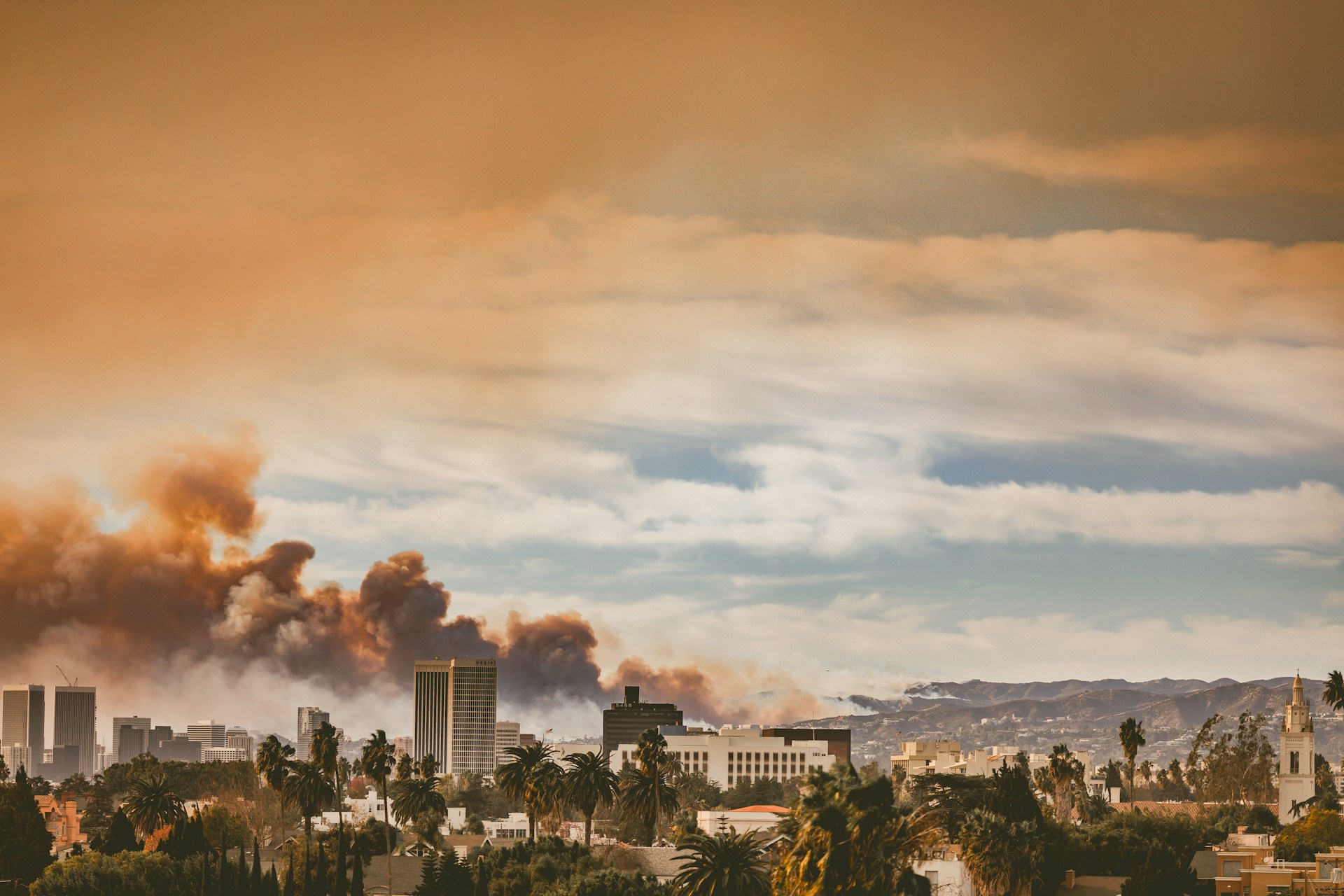
Cover Image by Jessica Christian on Unsplash