The most important part of a stadium is not the stadium
Watching the World Cup this month, I found myself distracted by something that had little to do with football – or soccer how they tend to call it in two of this year’s host countries: The television camera would pull away from the action and rise above the stadium. For a few seconds, the venue would dominate the screen – a magnificent structure packed with seventy or eighty thousand supporters. Then the camera would climb higher. And higher.
Soon the stadium would become a small island in a sea of parking lots, access roads and highway interchanges. The match was taking place inside a great sporting venue, yet from above it often looked as though the building accidentally had landed in some generic no-man’s land and not in New York, Toronto, San Francisco, Houston, Dallas of Ciudad de Mexico. Where is the city?
It is not a criticism of the World Cup – even though there is many things one can critizise in this edition. The tournament is being played in some remarkable stadiums. Is is also not uniquely American. Cities around the world have spent decades pushing their largest venues towards the urban edge. Stadiums, convention centres, arenas, exhibition halls and shopping malls increasingly occupy a landscape of their own – connected to the city, usually by elaborated road networks, but rarely part of it. Yet football offers a useful reminder that things can be different.
The best football stadiums in the world are often not the most spectacular buildings. They are the ones surrounded by the most interesting fifteen minutes. The stadium is important, of course. But the experience begins long before you see it.
Take Arsenal: Nobody remembers their first visit to the Emirates simply because of the football. What stays with people is the journey. Emerging from the Underground. Following thousands of supporters through the streets of north London. Passing pubs already overflowing an hour before kick-off. Seeing scarves hanging from shopfronts. Hearing debates about tactics that would embarrass both economists and military strategists.
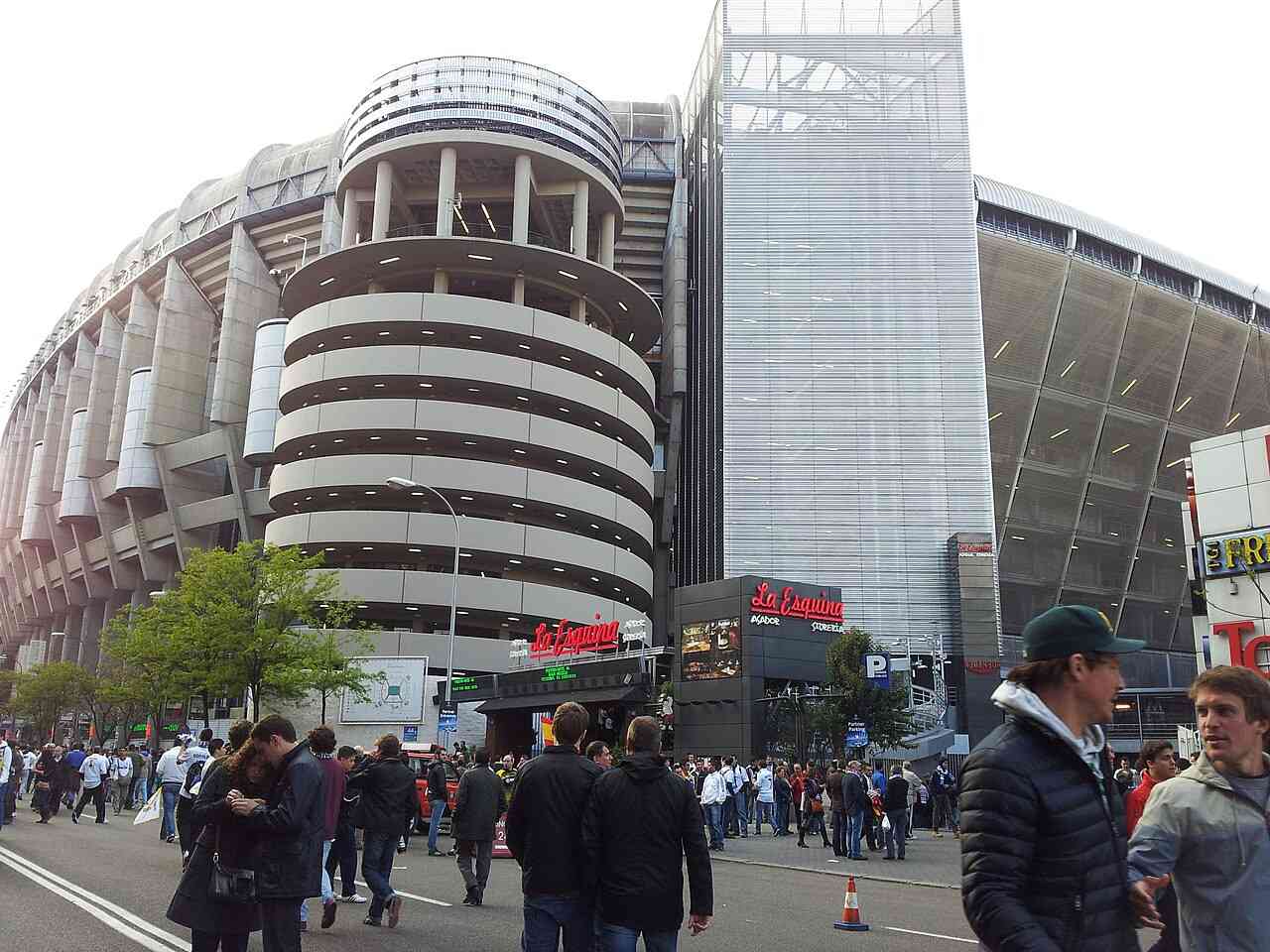
The same is true in Madrid: The Bernabéu rises from one of the city’s main avenues rather than from a moat of parking. On match day, Madrid does not stop at the stadium gates. The city and the stadium blend into one another. Supporters drift through restaurants, bars and plazas before making their way to the match.
In Sevilla, the Sánchez-Pizjuán feels less like a destination than a neighbourhood landmark. In Buenos Aires, La Bombonera is so deeply embedded in La Boca that separating the two is almost impossible. The stadium, the streets, the murals, the cafés and the crowds form a single urban experience. Even Wrigley Field in Chicago, despite belonging to another sport entirely, follows the same logic. People do not simply attend a game. They spend time in a district. The surrounding streets become part of the attraction.
The most important part of a stadium is not the stadium itself. It is the fifteen minutes around it.
Urbanists have spent years discussing the 15-minute city, the idea that daily needs should be accessible within a short walk. Football has quietly been demonstrating a related principle for more than a century. Great venues do not merely accommodate crowds. They generate urban life.
Everything happens in those fifteen minutes: People eat. Drink. Meet friends. Spend money. Argue. Celebrate. Wander. Get lost. Discover places they did not intend to visit. Businesses thrive because of the constant flow of people. Streets remain active. Public transport earns passengers. The neighbourhood becomes more valuable because the venue is there. The stadium acts its urban engine.
What is remarkable is that this is not a new idea. The Romans understood it perfectly. The Colosseum was not built outside Rome. It was built in Rome. Right in the heart of the city.
Imagine proposing the Colosseum today: Eighty thousand spectators. Massive crowds. Noise. Congestion. Security concerns. Event management challenges. The planning report would probably recommend a location near the ring road, close to motorway access, with ample parking and minimal disturbance to nearby residents. The Romans looked at exactly the same challenge and reached the opposite conclusion. They understood that gathering places create cities. The purpose of the arena was not simply to host events. It was to animate the surrounding urban fabric. Shops, traders, restaurants, accommodation and public life clustered around it. If fact the arena was part of the inventory of every urban center in the empire. The crowd was not a problem to be managed. The crowd was the economic and civic model.
Somewhere along the way we forgot this lesson: Large venues increasingly became something to isolate. They generated traffic, so we moved them away from people. They attracted crowds, so we surrounded them with parking. They created congestion, so we disconnected them from neighbourhoods. The result solved one problem while creating another. The venue survived. The urban life disappeared.
This is what makes the current World Cup so fascinating from an urban perspective. Many host stadiums are extraordinary buildings, but some of them reveal how differently we think about major destinations today. They are designed as self-contained machines. People arrive, consume and depart with remarkable efficiency. What they often lack is the ecosystem. There is no equivalent of Holloway Road. No equivalent of La Boca. No equivalent of the streets around Stamford Bridge or the bars surrounding the Bernabéu. The experience begins at the security checkpoint rather than several blocks away.
The economics are different as well. In an urban stadium district, the benefits spread. The local pub benefits. The bakery benefits. The metro benefits. The restaurant benefits. The hotel benefits. Hundreds of small businesses share in the value created by the event. In an isolated venue, much of that activity remains inside the perimeter.
One model creates an event. The other creates a neighbourhood.
For decades we have treated large venues as necessary interruptions to urban life. We have hidden them at the edge of town and surrounded them with parking. Yet the most beloved stadiums in the world suggest the opposite approach. The stadium is not the problem. The stadium is the opportunity.
The great football cities of England, Spain, Argentina and Brazil understood this long ago. The Romans understood it two thousand years ago. The venue itself is only the excuse. The real magic happens in the fifteen minutes around it. Perhaps that is where the future of city-making still has something to learn from football.
cover image: wikipedia.org