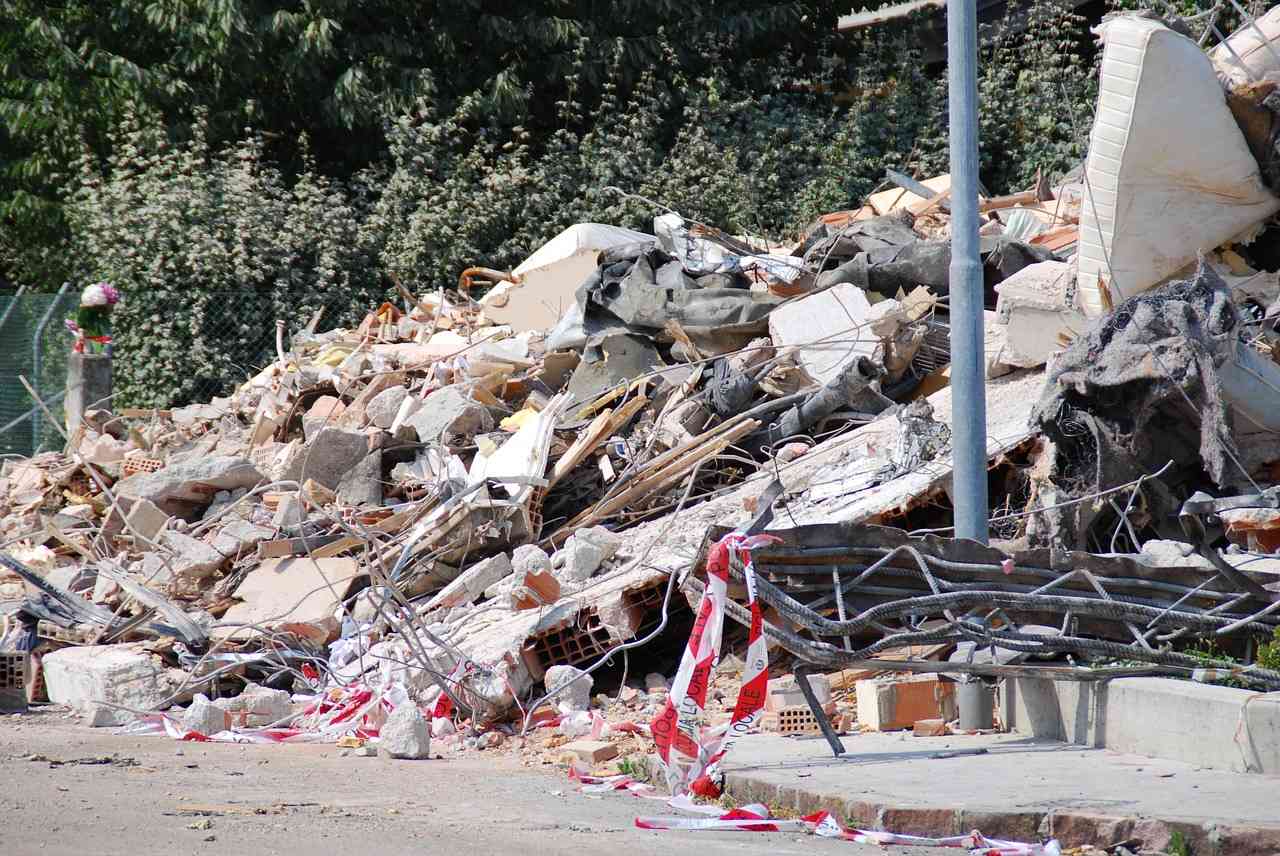
Imagine opening the news tomorrow morning to find that a major city or region has been struck by a catastrophic earthquake. Thousands of people are feared dead. Entire neighbourhoods have collapsed. Roads have become impassable, communications have failed and emergency services are overwhelmed.
Whether the next disaster happens in Caracas, Istanbul, Tokyo, San Francisco, Los Angeles or Chengdu is almost beside the point. Every one of these cities sits within reach of major seismic fault lines. Every one knows that another major earthquake will come. The only uncertainty is when.
Earthquakes remain among the few natural disasters we still cannot reliably predict. We understand tectonic plates. We monitor stress along fault lines. We calculate probabilities over decades. But we cannot tell a city that tomorrow afternoon, at precisely 14:17, the ground beneath it will begin to move.
For decades our response has therefore focused on making cities physically stronger. We improve building codes, retrofit bridges, reinforce hospitals, prepare emergency plans and train first responders. These investments save lives and must continue. But they all share one weakness. They prepare us for the shock itself. They do relatively little to help us understand the city in the moments immediately after the shock. And that is precisely where thousands of lives are often won or lost.
The first hour after a major urban disaster is one of almost complete uncertainty. Emergency call centres become overloaded. Electricity fails. Communications disappear. Roads are blocked. Fires break out. Hospitals are damaged. Rescue teams know people are trapped beneath collapsed buildings, but they have only fragments of information about where to go first.
Cities effectively become blind at the very moment they need to see most clearly.
In an age where artificial intelligence can analyse millions of images within minutes, where autonomous drones can coordinate without human pilots, where satellites revisit cities continuously and where digital twins are becoming standard planning tools, that blindness is no longer inevitable.
We should begin treating cities as living systems capable of assessing their own condition immediately after disaster strikes.
Imagine that the moment seismic sensors detect a major earthquake, thousands of autonomous drones launch automatically from fire stations, hospitals, schools, transport hubs and public buildings. They follow predefined emergency corridors while communicating with one another as a coordinated network. Within minutes they begin reconstructing an up-to-date three-dimensional model of the city.
Artificial intelligence immediately compares these observations with pre-disaster digital twins. Buildings that have collapsed are identified automatically. Roads are classified according to accessibility. Fires are detected. Bridges, tunnels and critical infrastructure are assessed for visible damage. Thermal cameras identify possible survivors beneath rubble. Acoustic sensors search for signs of life. Satellite imagery, surviving CCTV cameras, structural monitoring systems and anonymised mobile phone data are fused into one continuously evolving operational picture.
Instead of spending six or eight hours trying to understand what has happened, emergency managers begin making evidence-based decisions within minutes.
Search-and-rescue teams are directed towards locations with the highest probability of survivors. Medical resources are allocated according to actual need rather than assumptions. Engineers inspect infrastructure in order of strategic importance. Humanitarian organisations know where displaced populations are gathering. Political leaders communicate using verified information rather than speculation. The first hour becomes organised rather than chaotic.
Perhaps more importantly, the same platform would not wait quietly until disaster strikes. Continuous AI analysis could identify structural weaknesses in bridges, schools and hospitals before they become critical. Digital twins could simulate thousands of disaster scenarios to expose vulnerabilities that traditional planning misses. Evacuation strategies could be tested continuously. Infrastructure investments could be prioritised according to measurable risk. Cities would evolve from reacting to crises towards continuously preparing for them.
Although earthquakes provide the most compelling example, they are only one application. The same intelligence platform could support responses to floods, hurricanes, wildfires, tsunamis, industrial accidents, chemical spills, infrastructure failures, terrorist attacks and even conflict-related destruction. Every crisis begins with the same problem: decision-makers suddenly lose situational awareness. Every crisis demands the same response: restoring that understanding as quickly as possible.
This is why I believe we should stop thinking about disaster technologies as isolated tools and start thinking about an Urban Crisis Intelligence Platform – an operating system for cities under extreme stress.
The individual technologies already exist. Artificial intelligence has matured at extraordinary speed. Autonomous drones have become affordable and increasingly capable. Satellite constellations provide near real-time observation. Sensor networks continue to expand. Digital twins are transforming urban management. Cloud computing allows enormous volumes of information to be processed within minutes. What does not yet exist is the platform that brings these technologies together into one integrated operational environment.
That is the opportunity. And yes, it is also a business opportunity.
Around the world, cities are investing billions in resilience. Governments are searching for better disaster response capabilities. Insurance companies want better risk intelligence. Infrastructure operators need faster damage assessments. Humanitarian organisations require better situational awareness. Yet these needs are still addressed through fragmented solutions that rarely communicate with one another.
The opportunity is not another dashboard. The opportunity is to build the operating system that helps cities understand themselves when they need it most.
That is exactly the ambition we are beginning to explore. Not as another research project. Not as another demonstration. But as a scalable product that combines AI, autonomous drones, geospatial intelligence, digital twins and real-time urban data into a single platform that can be deployed anywhere in the world.
No single organisation can build something like this. It requires urbanists who understand how cities function. Emergency responders who know how decisions are made under pressure. AI engineers developing multimodal reasoning and computer vision. Robotics specialists pushing autonomous flight. Telecommunications experts creating resilient communications. Universities advancing the science. Governments willing to become pilot partners. International organisations establishing standards. And investors who recognise that solving one of humanity’s greatest urban challenges can also create one of its most valuable new technology platforms.
Every city that joins should strengthen the system. Every deployment should improve the models. Every disaster should become a lesson that helps protect the next city. Rather than developing isolated national solutions, we have an opportunity to create a global intelligence network for urban resilience.
So consider this an open invitation:
- If you are building AI models, autonomous robotics, geospatial technologies or digital twins, let’s explore how they fit together.
- If you are a city looking for new ways to prepare for the inevitable, let’s talk about becoming a pilot partner.
- If you are an emergency agency willing to rethink how the first hour is managed, we want your operational experience.
- If you are an investor looking for technology with both global impact and global demand, this is a conversation worth having.
And if you simply believe that cities deserve better tools when catastrophe strikes, join us.
We cannot stop earthquakes. We cannot eliminate uncertainty. But we can build the intelligence that helps cities respond faster, smarter and with far greater confidence than they do today.
The next great urban disaster is not waiting for us. Perhaps it is time we stopped waiting too.
cover image: cobain86 (pixabay.com): https://www.needpix.com/photo/729466/