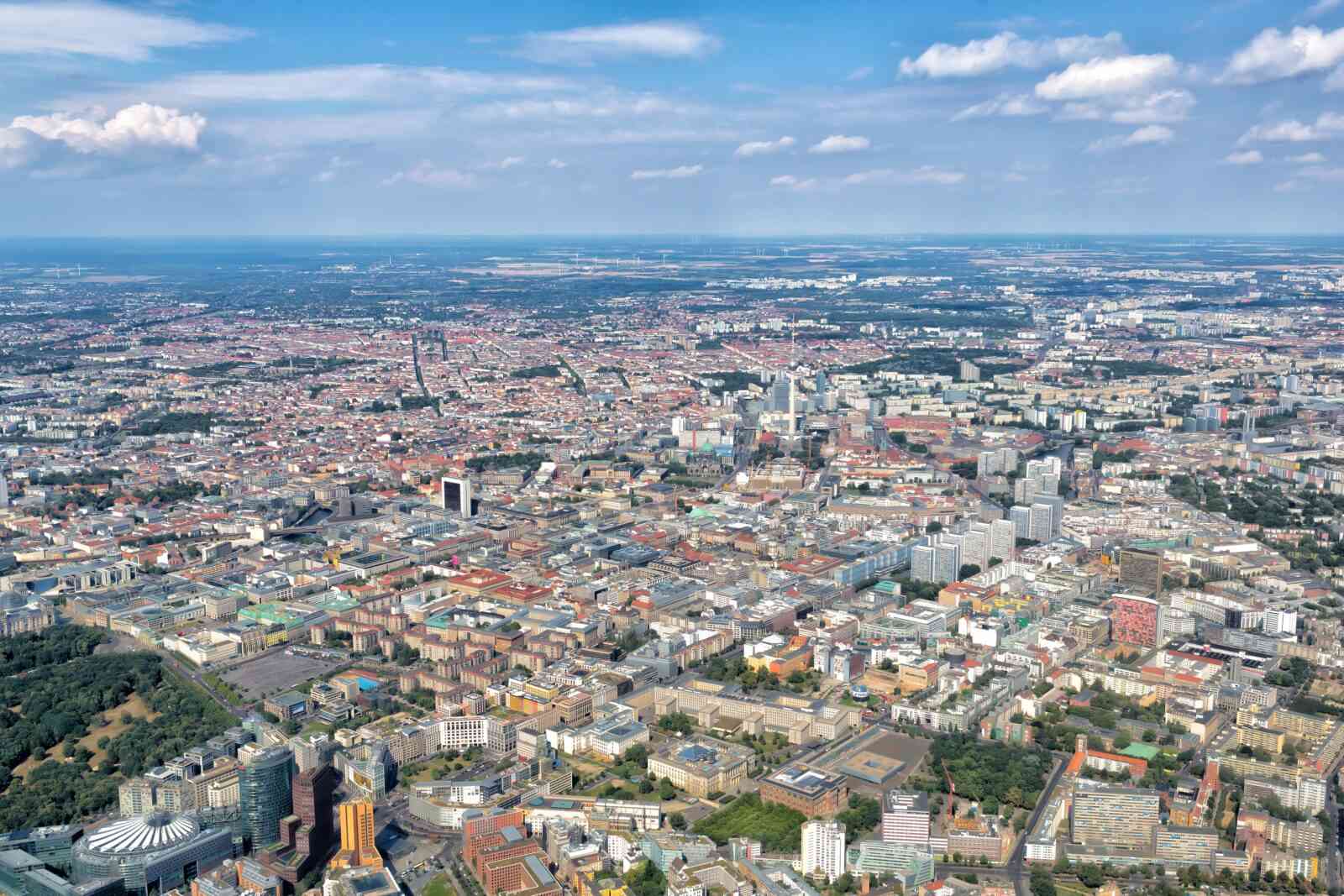
Berlin needs collective housing. But buying the shortage is no substitute for building its way out of it.
Berlin has rediscovered one of the oldest political responses to scarcity: fight over who owns what already exists.
The proposal to vergesellschaften—socialise or collectivise—the housing portfolios of large private landlords—is attractive for understandable reasons. Housing is not an ordinary commodity. People cannot simply stop consuming it when prices rise. A city therefore has every reason to maintain a substantial stock of publicly owned, cooperative and otherwise non-market housing.
The problem begins when we confuse changing the ownership of housing with creating housing. Berlin does not primarily have an ownership crisis. It has a scarcity crisis. Collectivisation can help people who need protection immediately, but spending billions transferring existing apartments from one owner to another cannot be the principal solution to a shortage.
Berlin’s real housing crisis starts when you move
Something peculiar has happened to Berlin. If you already have an apartment, your rent may still be surprisingly reasonable. If you need another apartment, Berlin suddenly looks like one of Europe’s expensive cities.
The Investitionsbank Berlin (IBB) Housing Market Report 2025 makes this divide remarkably clear. Across more than 722,000 existing tenancies reported by members of the Association of Berlin-Brandenburg Housing Companies, the average net cold rent was €7.10 per square metre. Meanwhile, the median apartment advertised on the open Berlin market was €15.78 per square metre. Existing apartments coming onto the market averaged €14.48.
That is an extraordinary gap. For many Berliners, the problem is not their current apartment but what happens when they need another one. Have another child, separate from your partner, find a job on the other side of town, need a smaller apartment when you get older or arrive in Berlin to study, and suddenly you cross from one housing economy into another.
Berlin has inadvertently created something close to a mobility tax: stay where you are and you may pay €7 or €8 per square metre; move and you may encounter €15, €18 or €20. A pensioner stays in 100 square metres because moving into a newly rented 60-square-metre apartment may barely reduce the monthly bill. A growing family remains in a flat that is too small. The housing stock becomes progressively less efficiently allocated.
That is a very different problem from simply saying that corporate landlords charge outrageous rents.
Even Vonovia tells a more complicated story
Vonovia is an obvious villain in the political narrative. It is enormous, publicly listed and owns around 130,000 apartments in Berlin, including roughly 100,000 associated with Deutsche Wohnen. But look at the actual rents. Vonovia reports an average Berlin rent in 2026 of €8.17 per square metre and an average of €10.80 for newly concluded Berlin contracts.
One can criticise Vonovia’s business model, service, rent increases or corporate structure. But €8.17 per square metre is difficult to reconcile with the idea that Berlin’s housing crisis can primarily be explained by a corporation extracting fantastical rents from its existing tenants. Nor does rent simply turn into profit. Buildings have to be managed, repaired, financed and increasingly decarbonised.
Much of the housing that would be collectivised is existing stock. Collectivisation therefore doesn’t simply mean acquiring 200,000 rent cheques. It means acquiring 200,000 roofs, façades, lifts, heating systems, pipes and windows that will progressively require investment.
There is also another part of housing expenditure that tends to disappear when everything is discussed simply as “rent”: energy, heating, taxes, municipal charges and other operating costs have risen substantially. Changing the owner of the building doesn’t make gas cheaper, replace the boiler or insulate the façade.
Collectivisation can still have a role
None of this means collectivisation is useless. There are households whose housing problem cannot wait ten years for Berlin to build its way out of the shortage. People threatened with displacement, households at the bottom of the income distribution and tenants in particularly vulnerable circumstances need protection now.
For them, selective public acquisition can be justified as an emergency instrument. Berlin can acquire buildings where displacement risks are acute or strategically important portfolios and move them permanently into municipal or cooperative ownership.
But emergency intervention and housing policy perform different jobs. One protects people from the consequences of scarcity today; the other must reduce the scarcity that produces those consequences tomorrow. Berlin needs both.
The most expensive way of producing zero apartments
This is where the economics become uncomfortable. Different calculations for large-scale collectivisation produce radically different numbers. The original official estimate for bringing roughly 243,000 apartments into public ownership put compensation at €28.8–36 billion, plus implementation costs. Supporters argue that compensation could legally be substantially below market value and have produced estimates closer to €8–18 billion.
Take €8 billion and €18 billion simply as hypothetical cases. After spending either amount acquiring existing housing, Berlin has exactly the same number of apartments as before. No additional bedroom has been created, no student has gained a place to live and no family searching for a larger home has gained another option.
Public ownership can provide long-term stability, and that has value. But large-scale acquisition primarily redistributes ownership among people who are already housed. The outsider remains outside.
Now consider the alternative. Assume an all-in cost of €250,000 to €350,000 per new apartment, including construction, land, planning, infrastructure, professional fees and contingencies. At a €300,000 midpoint, €8 billion corresponds to around 26,700 new apartments; €18 billion to 60,000. Across the broader cost range, €8 billion represents roughly 23,000–32,000 homes and €18 billion around 51,000–72,000.
Even that understates the potential because the government does not have to finance every apartment entirely with cash. Public land can be provided through leaseholds, municipal companies can borrow against future rental income, cooperatives can contribute equity, private development can cross-subsidise affordable housing, and federal funding can be combined with Berlin’s money. Public billions can therefore leverage a considerably larger construction programme.
That is the real opportunity cost: spend billions buying existing apartments and Berlin gets no additional homes. Deploy the same capital towards new housing and it can create tens of thousands while simultaneously expanding the public and cooperative stock.
But Berlin also has to allow them to be built
Money alone will not produce those homes. Berlin has recognised this and introduced an impressive collection of reforms: the Schneller-Bauen-Gesetz, changes to dozens of provisions across planning and building law, tighter administrative deadlines and simplified procedures, followed by the federal Bau-Turbo and Berlin’s Gesetz für einfaches Bauen. The objective throughout has been essentially the same: make housing easier and faster to approve.
There are signs of improvement—housing permits increased strongly in 2025—but legislation has yet to translate into anything close to the scale of construction Berlin needs. The problem is therefore no longer simply the absence of legal instruments. It is whether the city is prepared to use them decisively and whether projects can still be delayed, reduced or stopped through lengthy administrative and legal processes.
This leads to an uncomfortable conflict of interests. Existing property owners do not necessarily benefit from abundant housing. Scarcity supports the value of what already exists; more apartments create alternatives for tenants and buyers and reduce scarcity premiums. A homeowner opposing 200 new apartments nearby may have understandable personal concerns about traffic, views, parking or neighbourhood character, but those interests are not automatically the interests of the city as a whole.
There is also a fundamental asymmetry: the future residents of those 200 apartments are rarely present when the project is debated. Existing residents are. Those benefiting from scarcity are organised around the proposed development; those paying for it through higher rents may live elsewhere or have not even arrived in Berlin yet.
Planning safeguards and access to the courts remain essential, but they cannot become an effectively indefinite right to prevent housing that complies with democratically established planning objectives. Objection periods can be finite, procedures can run in parallel and decisions must eventually become decisions. The interest of existing property owners in preserving scarcity cannot outweigh society’s interest in having enough homes.
Public housing can create a market rather than replace one
If Berlin added public and affordable housing at sufficient scale, it would start influencing the rest of the market. Suppose tens of thousands of apartments became available at €8, €9, €10 or €11 per square metre. They would not only benefit their occupants; they would compete with apartments offered at €15 or €17.
A landlord asking €17 would suddenly face a problem that Berlin’s housing market has largely eliminated: the possibility that nobody takes the apartment.
Competition requires alternatives. Berlin currently has too few. Building changes that equation; transferring an existing apartment from Vonovia to a municipal company does not. The tenant remains in it either way.
There is at least a small indication of this mechanism in the latest figures. In 2025 Berlin’s median advertised rent essentially stopped increasing, rising only 0.3% to €15.78 per square metre, while advertised new-build rents fell by 2.6%. This does not establish that increased supply caused the change, but it demonstrates that rental prices are not destined to rise indefinitely regardless of market conditions.
Use public housing to make the city move again
A much larger new public and cooperative sector could also prioritise people facing the greatest barriers in the existing market: low-income households, single parents, people with disabilities, key workers, young families, people leaving abusive households or elderly people willing to downsize.
Berlin could use new affordable housing to unlock its existing housing stock. Offer an older person occupying an inexpensive 100-square-metre apartment preferential access to a newly built, accessible 60-square-metre apartment at a comparable total monthly cost. The older tenant gains a more appropriate home and a family searching for three bedrooms gains access to the existing apartment.
One new apartment can therefore unlock another. A functioning housing market enables movement rather than punishing it.
The politics of the fortunate 200,000
This leads to an uncomfortable distributional question. Large-scale collectivisation would unquestionably benefit many tenants living in the affected portfolios through stronger long-term protection and potentially greater influence over their housing.
But those benefits largely accrue to people who already possess one of Berlin’s most valuable commodities: a permanent tenancy.
The student arriving next October gains no apartment. Neither does the nurse recruited from abroad, the couple having their second child, the divorced parent suddenly needing another home or the 28-year-old still living with her parents. Because the greatest price discontinuity occurs when someone moves, the system increasingly rewards staying put.
This is why collectivisation makes sense as a targeted instrument but becomes problematic as the centrepiece of housing policy. Protect people who urgently need protection. Acquire buildings where there is a compelling social reason to do so. But spend the overwhelming share of political attention, public money and administrative capacity on expanding supply.
Build the city instead
Berlin should absolutely expand collective housing. It should do so primarily by expanding the housing stock.
Use public land, buy strategic development sites, make planning radically faster and allow substantially greater density around stations. Build municipal housing and fund cooperatives, but also invite private capital. Offer long leases instead of selling public land, cross-subsidise affordable apartments with market-rate ones and reserve part of the new affordable stock for households with the greatest immediate need.
And reduce the ability of incumbent interests to block housing that conforms to democratically established plans. A society cannot allow those who already own property to preserve scarcity for their own benefit while everyone else pays for that scarcity through higher rents and fewer choices.
The ambition behind Vergesellschaftung is therefore not necessarily wrong. Collective ownership can protect vulnerable households and provide stability that markets alone will not. In an emergency, acquiring existing housing may be exactly the right thing to do.
But emergency medicine is not a cure.
Berlin can spend billions transferring apartments that already exist from one balance sheet to another, or it can use most of those billions to create additional apartments, retain a substantial share permanently in public or cooperative ownership and force competition back into a housing market that desperately needs it.
Collectivise where necessary. Build wherever possible. And stop allowing scarcity to be protected by those who benefit from it.
Cover image: wikimedia.org
AI tools have been used for spelling, grammar and improvement of expression.