Architecture as a method for confronting complexity.
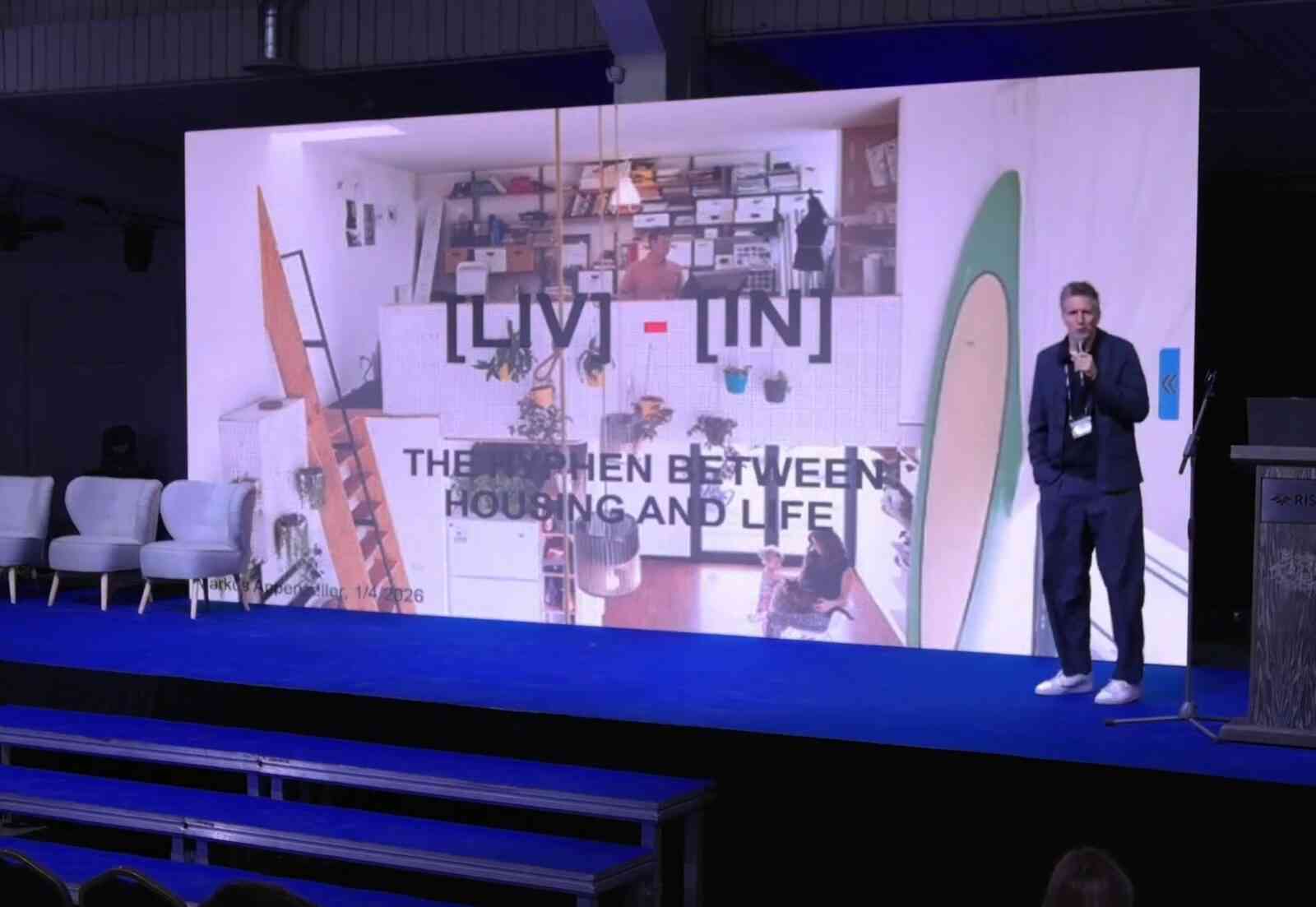
This thought piece is a reflection on the Education Symposium organised by IABR and OASE on 9 October 2026, during the Rotterdam Architecture Biennale: SOS — Systems of Support. The discussion about the future of architectural education raises a larger question: what should the profession itself become?
We have mistaken the drawing for the work—and the building for the limit of our ambition.
Architecture brings knowledge, people and competing demands together. It moves between scales, connects intention to consequence and gives form to possibilities that do not yet exist. These capacities have value far beyond the design of buildings. They belong wherever complex questions require a direction.
Artificial intelligence and autonomous robots will change how work is organised and where it happens. Climate change demands decisions about adaptation, resources, settlement and retreat. A shifting world order raises questions about dependence, security and cooperation. Multilateral mechanisms must find ways to act across increasingly divergent interests. These transformations are technological, political, economic, social and spatial at once. Their consequences meet in the same world.
Who can understand enough of these relationships to judge broadly? Who can bring conflicting expertise into a proposition that people can examine, challenge and act upon?
Architecture should be prepared to answer.
Its particular strength is generalism. Artistic imagination, technical understanding, economic reasoning, cultural awareness and environmental responsibility converge in architectural thinking. The architect moves from a material to a territory, from an individual experience to an institutional system. Each scale reveals something the others conceal. Each decision changes the conditions of another.
This is a method for dealing with complexity. Investigate the conditions. Identify the forces. Make relationships visible. Develop alternatives. Test their consequences. Bring people into the argument. Revise the proposition. Establish a direction through which action becomes possible.
The method can serve a building. It can also serve the reorganisation of work, a climate adaptation programme, a public institution or a regional strategy. Its value lies in connecting knowledge and imagining how change can operate in reality.
Architecture must embrace thinking big again.
Big thinking requires the courage to widen the question. It asks what a commission leaves out, what a model cannot see and what a decision will set in motion. It holds long horizons and immediate needs together. The action may be small: a changed rule, a pilot, a repaired street, a different allocation of resources. Its intelligence depends on understanding the larger system in which it acts.
Ambition must be matched by judgement. Architects cannot claim competence in every field. They must know enough to recognise relationships, identify gaps and assemble the expertise required. Their responsibility is to make the whole intelligible and help others decide.
Strategic advice belongs at the centre of this work. Build the evidence base. Analyse conditions. Compare scenarios. Expose assumptions. Explain who benefits, who carries the costs and what must happen for a proposal to succeed. Imagination gives a possible future form; information and analysis allow that future to withstand scrutiny.
Architecture has too often surrendered this territory. Major consultancies have made advice a valuable product while architects have offered their strategic intelligence as an introduction to a design commission. We enter after priorities have been fixed, investments committed and the decisive questions narrowed.
When complex questions are framed primarily through economic performance, essential relationships disappear. People become demand. Land becomes capacity. Institutions become delivery mechanisms. A strategy can satisfy its indicators while failing the society it is intended to serve. Financial analysis has great value, but its authority must remain proportionate to what it can explain.
Architects must demonstrate that they can offer broader, better grounded advice. This requires analytical discipline, clear arguments and accountability for outcomes. Breadth without rigour becomes opinion. Rigour without breadth can make the wrong direction look inevitable.
The profession’s centre must become informed judgement: advising, envisioning, directing, selecting and raising the bar. Recognising when a brief contains the wrong question. Interrupting a process whose momentum conceals failure. Building a coalition around a necessary change. Making decisions possible without pretending uncertainty has disappeared.
The instruments are open. Drawings, simulations, materials, intelligent agents, policies, prototypes and public arguments can all become means of architectural action. The architect must choose and direct them according to the problem. Professional identity must be strong enough to survive the replacement of its tools.
Schools must stop organising their ambition around the competencies offices need today. By the time graduates enter practice, some will have disappeared; others will have changed enough to require learning them again. Education that follows the current production workflow prepares students for a departing condition.
Teach capacities that endure: spatial imagination, systems thinking, technical principles, historical understanding, economic literacy and critical judgement. Teach students to construct evidence, evaluate claims, direct expertise and work through conflict. Give them problems large enough to demand intellectual breadth and situations concrete enough to expose the consequences of their thinking.
“The junior is dead” names a danger within this transition. Automation threatens the routine tasks through which young architects once acquired experience. If the first rungs disappear, expertise needs another route: supervised responsibility, visible reasoning and direct exposure to the consequences of decisions.
This makes the educational reset unavoidable—and opens a larger opportunity. If we must reconsider what architects learn, how they gain experience and what qualifies them to act, we can also reconsider the profession they enter. Education should become the place where a new professional ambition takes shape.
Practice must follow. Strategic advice, integration and direction need explicit value and proper remuneration. They cannot remain invisible labour financed through drawing fees. Architecture must explain what this work contributes, charge for it and accept responsibility for the claims it makes.
There is no old professional order to restore. Nostalgia, a return to craftsmanship and retreat into high-cost exclusivity cannot provide an adequate future for the discipline. Its future lies in extending its strongest capacities into the questions that will shape collective life.
Think across scales. Establish the evidence. Assemble the knowledge. Judge broadly. Act precisely.
The scale of our thinking must match the complexity of the world, even when the action is small. Architecture must help society establish direction and turn that direction into consequences it can understand, question and improve.
I call for a complete reset of the profession of architect: its purpose, its education, its field of action, its economy and its responsibility. The capacity to confront complexity must become the foundation of what an architect is.
AI tools have been used for spelling, grammar and expression.
Cover Image credits: https://www.flickr.com/photos/yellowbookltd/6961387924/in/photostream/ under CC 2.0 License