For decades, European planners looked at Gulf cities with quiet superiority. They saw places that were too hot, too dependent on air conditioning, too dominated by cars, shopping malls and covered spaces. Europe, by contrast, seemed to have discovered the ideal urban model: compact, walkable, bicycle-friendly, open, transparent and full of public life.
The assumption was simple. Europe represented the future. The Gulf was compensating for an unfortunate climate.
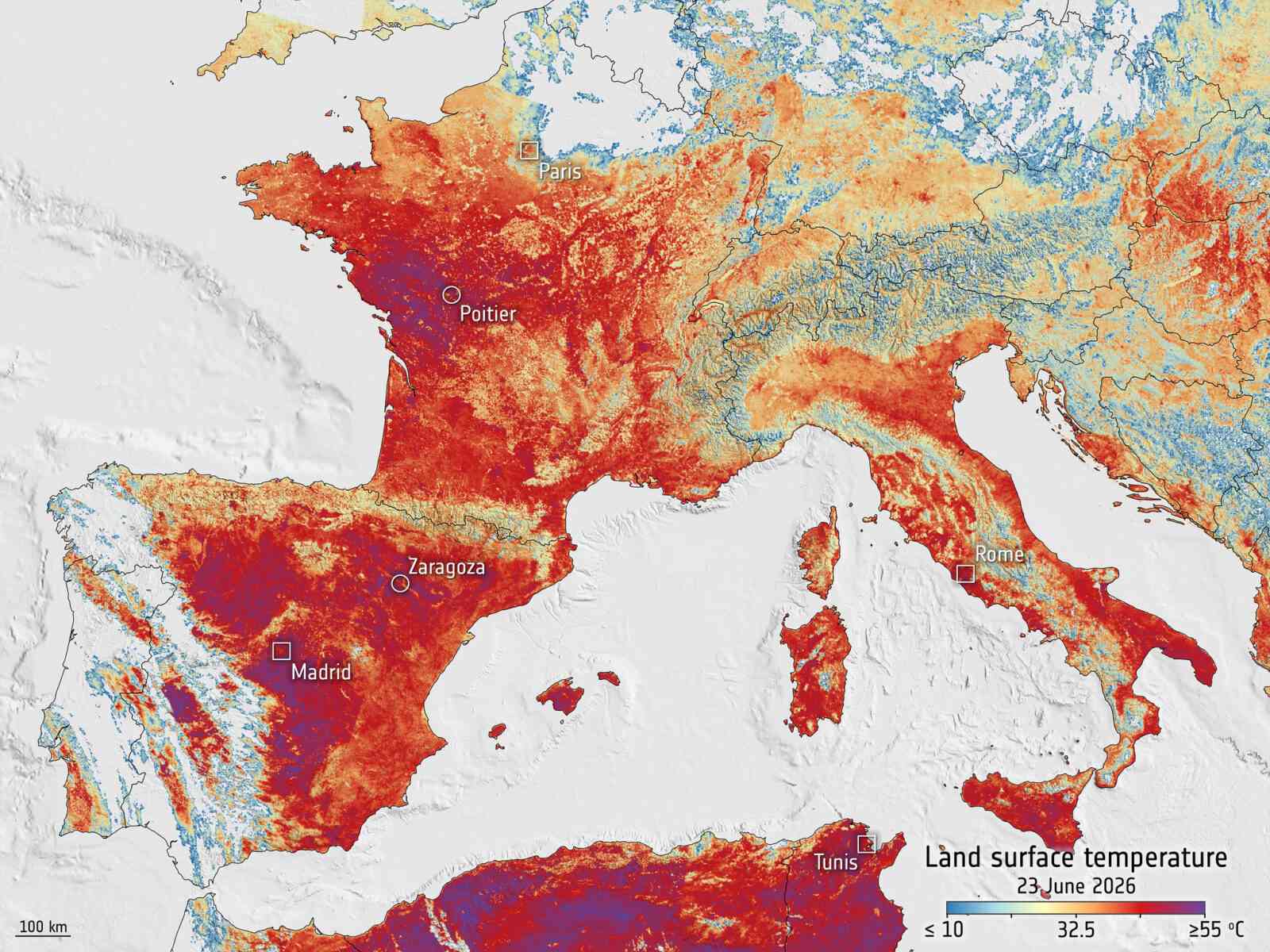
That confidence is becoming increasingly difficult to sustain: Every summer, temperatures in Madrid, Rome, Athens and increasingly Paris, Berlin and even London approach levels once associated almost exclusively with the Arabian Peninsula. Heat is no longer an occasional inconvenience. It is becoming one of the defining conditions of urban life. The climate that shaped European cities for centuries is slowly disappearing.
The challenge is not simply that Europe is becoming hotter. The challenge is that our cities remain remarkably static.
Buildings receive one façade expected to perform throughout the year. Public squares have one permanent configuration. Streets have one fixed profile. Parks have one planting strategy. Regulations evaluate buildings as static objects rather than adaptive systems. We continue to design cities as if July and January ask the same questions.
Yet climate is dynamic. Perhaps cities should become dynamic as well. Rather than abandoning the European city, we should make it seasonal.
Imagine public squares that deploy lightweight shading structures every summer and remove them when winter sunlight becomes valuable again. Imagine mobile planting that creates temporary microclimates during heatwaves before moving elsewhere as the seasons change. Streets could receive temporary canopies during increasingly hot summers while remaining open during the darker months. Water features could become cooling infrastructure in July and public space in December.
Architecture should become equally adaptive. Why should a building look and perform exactly the same in January as it does in July? External shading could appear only when needed. Building envelopes could open to maximise natural ventilation and close to retain heat. Seasonal insulation, operable façades, ventilated skins and adaptive roofs already exist. Yet they remain technical features instead of becoming central architectural ideas.
The obstacle is not technology. It is imagination.
Even our regulations still assume permanence. Energy performance standards largely assess buildings as fixed objects rather than adaptive systems. Planning regulations distinguish between permanent and temporary structures but rarely encourage seasonal transformation. We have developed sophisticated methods to measure static performance but remarkably few to reward adaptability.
As Europe searches for answers, it may not need to invent them from scratch.
For centuries, settlements on the Arabian Peninsula had no choice but to negotiate with extreme heat. Long before mechanical cooling, they developed an extraordinary intelligence for creating comfort through urban form. Narrow streets were not signs of backwardness but sophisticated environmental engineering. Buildings stood close together because every metre of shadow mattered. Arcades, courtyards, covered markets, wind towers, mashrabiyas and deep overhangs were technologies that allowed cities to function despite the climate.
These principles were never intended for Europe. But perhaps they are now.
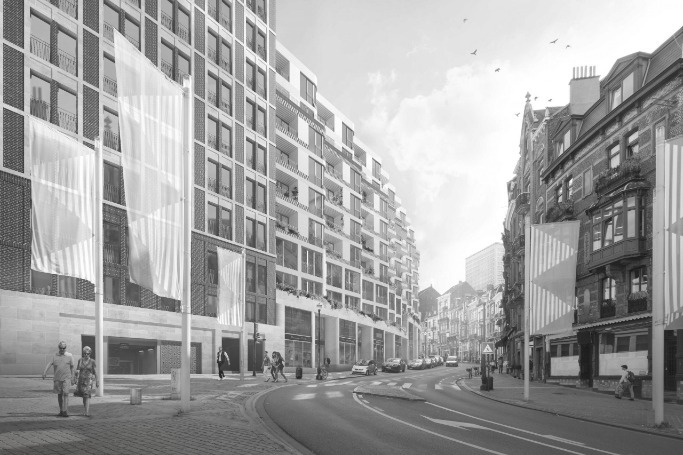
This does not mean European cities should become Gulf cities. The compact streets of Florence, Barcelona or Amsterdam should remain recognisably European. Their public squares, cafés and parks remain among Europe’s greatest urban achievements.
But during increasingly hot summers, these cities could temporarily borrow the climatic intelligence developed over centuries on the Arabian Peninsula. The European city could retain its identity while becoming far more resilient. Instead of choosing between two urban traditions, we should combine their strengths.
There is, however, one irony.
The Arabian Peninsula spent centuries developing an architecture of adaptation. Then oil made adaptation seem unnecessary. Mechanical cooling replaced climatic intelligence. Traditional settlements gave way to wide highways, isolated towers, exposed public spaces and glass buildings that consume enormous amounts of energy simply to remain habitable. The region that had learned to negotiate with heat increasingly chose to overpower it instead.
Europe now risks making exactly the same mistake.
Rather than fundamentally redesigning cities for a hotter climate, we increasingly respond with larger cooling systems, more efficient air conditioners and better engineering while leaving the underlying urban model largely untouched. We are trying to solve a planning problem with mechanical technology. Perhaps the future does not belong to either the European city or the Gulf city as they exist today. Perhaps it belongs to a marriage of the two: the urban richness, walkability and civic life of Europe combined with the climatic intelligence that the Arabian Peninsula spent centuries perfecting.
The irony of climate change may be that the region that developed many of the answers abandoned them just as Europe started needing them.
Cover Image: European Space Agency