Why sustainable choices are creating unexpected conflicts
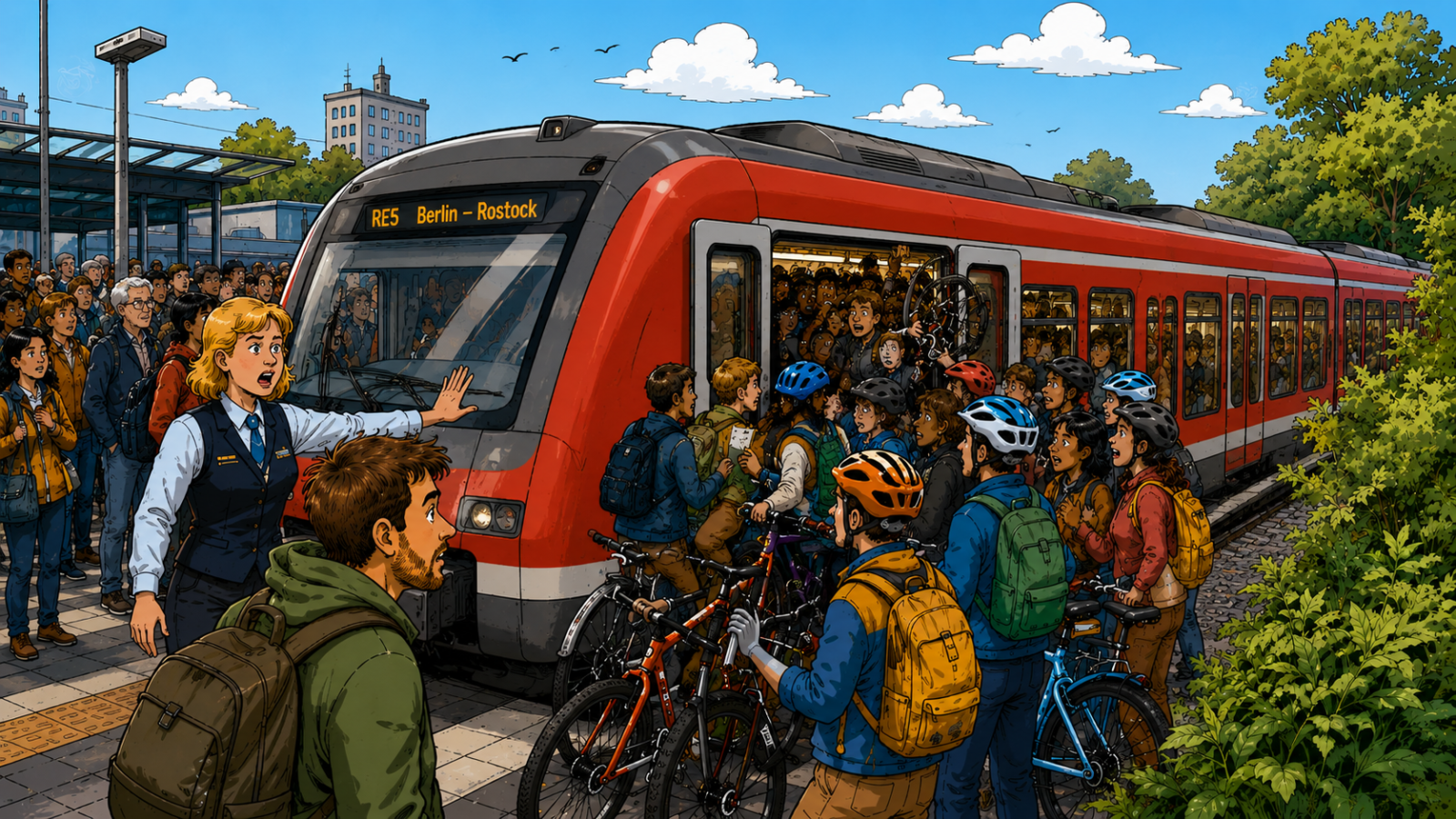
Every spring, the same scenes unfold on the regional railway lines connecting Berlin with the lakes of Brandenburg and the beaches of the Baltic coast. Cyclists crowd station platforms. Families with bicycles wait anxiously as already packed trains arrive. Conductors wave people back. Arguments break out. Some travellers are left behind. Others force their bicycles into the last available spaces. Delays accumulate at every station. What should be a picture of sustainable mobility in action increasingly resembles a struggle over scarce resources.
This year, the debate reached a new level when Berlin railway expert Christian Böttger proposed a measure that would have seemed politically impossible only a few years ago. On heavily overloaded routes, he argued, bicycles should simply be banned from regional trains. According to Böttger, the situation on some lines has become unmanageable. Loading and unloading bicycles delays departures, blocks escape routes, reduces seating capacity and contributes to operational problems throughout the network. On routes such as the RE5 to Rostock and the RE3 towards Stralsund, he believes the railway has reached its limits.
The reaction was immediate. Cycling organisations rejected the proposal. The problem, they argued, is not excessive demand but insufficient supply. People are doing exactly what transport policy has encouraged them to do for decades: combining cycling with public transport. Restricting bicycles would punish sustainable behaviour rather than addressing the lack of capacity. The Berlin-Brandenburg transport authority largely agreed, arguing that outright bans would harm rural mobility and affect travellers who depend on the combination of train and bicycle to complete their journeys. Others revived proposals for compulsory bicycle reservations. Passenger groups called for more trains. Everyone agreed that there was a problem. Nobody could agree on the solution.
What makes the discussion so revealing is that nobody involved is behaving unreasonably. The railway expert is concerned about reliability and safety. Cyclists want to travel sustainably. Transport authorities want accessibility. Passengers without bicycles simply want a seat and a train that departs on time. The conflict does not arise because one group is right and another is wrong. It emerges because several legitimate objectives have begun to compete for the same limited space.
This is increasingly becoming one of the defining moral challenges of the sustainability transition. For decades, environmental policy was largely framed as a struggle to change behaviour. People needed to drive less, fly less, consume less energy and make greater use of public transport. The assumption was that once people adopted these behaviours, society would move closer to its environmental goals. Much of the political and intellectual effort of the last fifty years was devoted to persuading people to make different choices.
Yet in many places that effort has succeeded. More people cycle. More people use public transport. More people seek compact urban lifestyles. More people choose renewable energy. The desired behaviour has arrived. The problem is that the systems designed to support it have often failed to expand at the same pace. Success itself has started to generate tensions.
The bicycle debate in Berlin is only one example. Across Europe, cities have spent years encouraging residents to use public transport instead of private cars. In many metropolitan regions ridership has grown significantly. The result is that overcrowding, once regarded as a sign of success, has become a source of frustration. Commuters who choose the environmentally responsible option increasingly find themselves squeezed into packed trains and buses. Railway operators struggle to maintain punctuality. Passengers experience longer journeys and less comfort. What was intended as a public good begins to feel like a personal inconvenience.
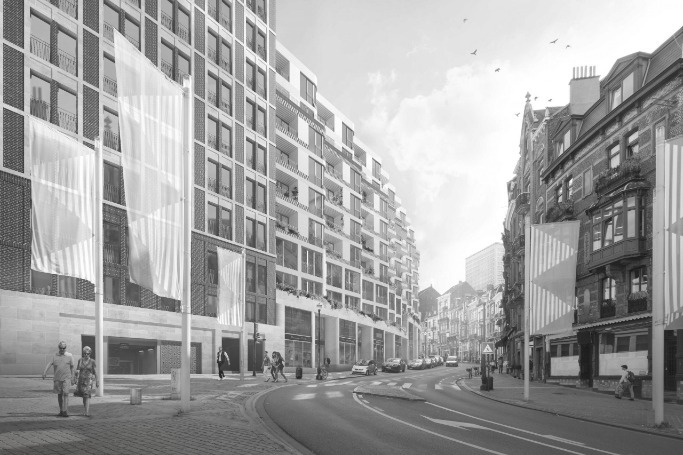
Housing presents a similar paradox. Urban planners have long promoted compact cities as a more sustainable alternative to suburban sprawl. Dense neighbourhoods reduce travel distances, support public transport and consume less land. Yet the most successful urban districts often become victims of their own attractiveness. As demand rises, housing prices follow. Long-time residents are displaced. Young families struggle to enter the market. Social diversity declines. A policy intended to create sustainable and inclusive communities can end up producing exclusion and inequality. The better a place becomes, the harder it often becomes for ordinary people to remain there.
Tourism offers another illustration. Many cities have invested heavily in walkable streets, attractive public spaces and high-quality public transport. They have successfully transformed themselves into desirable destinations. Yet places such as Amsterdam, Barcelona and Venice now struggle with the consequences of their own success. Visitors overwhelm public spaces, housing costs rise and local residents increasingly feel that their city is no longer theirs. The qualities that attracted people in the first place become threatened by the volume of people arriving to enjoy them. The success of urban regeneration becomes the source of a new crisis.
Even urban greening reveals the same dynamic. Cities rightly invest in parks, waterfronts and green corridors to improve public health and environmental quality. Yet when these spaces become extremely popular, they often suffer from overcrowding and ecological degradation. Lawns become worn, habitats are disturbed and maintenance costs escalate. The success of a public amenity can undermine the very qualities that made it successful.
What makes these situations morally challenging is that they involve conflicts between competing goods rather than between good and bad. In the past, many policy debates could be framed as a contest between environmental interests and economic interests, or between sustainability and convenience. Today’s conflicts are often more subtle. The cyclist boarding a train is making a sustainable choice. The passenger hoping for an available seat is also making a sustainable choice. The railway operator attempting to maintain punctual service is pursuing a legitimate public objective as well. The problem lies not in individual behaviour but in the mismatch between demand and capacity.
As a result, traditional moral narratives become less useful. There are no obvious villains. Nobody is abusing the system. People are behaving exactly as society hoped they would. The conflict emerges because the success of one public objective begins to undermine another. A train cannot simultaneously accommodate unlimited numbers of bicycles, passengers, luggage and wheelchairs. A popular neighbourhood cannot absorb unlimited demand. A successful tourist destination cannot host unlimited visitors. Scarcity remains, even when the objectives are noble.
The Berlin discussion therefore raises a broader question. What should society do when environmentally desirable behaviour becomes so successful that infrastructure can no longer accommodate it? The instinctive response is to build more capacity, and in many cases that remains the best solution. More trains, longer platforms, larger bicycle compartments and better infrastructure would reduce conflict. Yet capacity is expensive, slow to deliver and often constrained by physical and financial limits. No transport system can be designed around the busiest summer weekend of the year.
This reality forces difficult choices. Reservations, restrictions and prioritisation mechanisms become increasingly attractive. Yet these measures inevitably create winners and losers. A bicycle reservation system may improve predictability while reducing spontaneity. A bicycle ban may improve train operations while limiting sustainable travel. Every solution solves one problem while creating another. Policymakers increasingly find themselves managing trade-offs between competing public goods rather than advancing a single objective.
The debate unfolding on Berlin’s regional railways therefore reflects something much larger than bicycles on trains. It signals a transition into a new phase of environmental policy. For decades the challenge was convincing people to change their behaviour. Increasingly, the challenge is managing what happens when they do.
The temptation in moments like these is to think small. Introduce a reservation system. Add a few more train carriages. Adjust timetables. Restrict bicycles on certain services. These measures may provide temporary relief, but they do not address the underlying reality. The demand for sustainable mobility, renewable energy, urban housing and climate adaptation is growing at a scale that incremental solutions can no longer match.
Perhaps the deeper lesson from the crowded trains leaving Berlin is that societies have become accustomed to thinking about great transitions in surprisingly modest terms. We celebrate pilot projects, demonstration programmes and gradual improvements while the challenges we face increasingly require responses of a completely different magnitude.
Elsewhere in the world, examples of such ambition already exist. China has built the world’s largest high-speed rail network in little more than a decade, adding thousands of kilometres of track every year and connecting cities that were once separated by day-long journeys. High-speed rail has become not a niche alternative but a backbone of national mobility. The scale is difficult for Europeans to comprehend because it treats infrastructure not as an isolated project but as a strategic national undertaking.
The same can be said for renewable energy. China installs solar panels and wind turbines at a pace measured not in individual projects but in entire industries. Vast solar parks stretch across deserts. Offshore wind farms appear by the hundreds. The objective is not to demonstrate what is possible but to transform the energy system itself.
Similar thinking can be found elsewhere. India is pursuing some of the world’s largest solar programmes. Morocco has constructed one of the largest concentrated solar power complexes on earth. Across the Sahel, the Great Green Wall initiative seeks to reverse desertification through a green belt stretching thousands of kilometres across Africa. Saudi Arabia’s environmental programmes aim to plant billions of trees and restore degraded landscapes. While progress varies, the scale of ambition is undeniable.
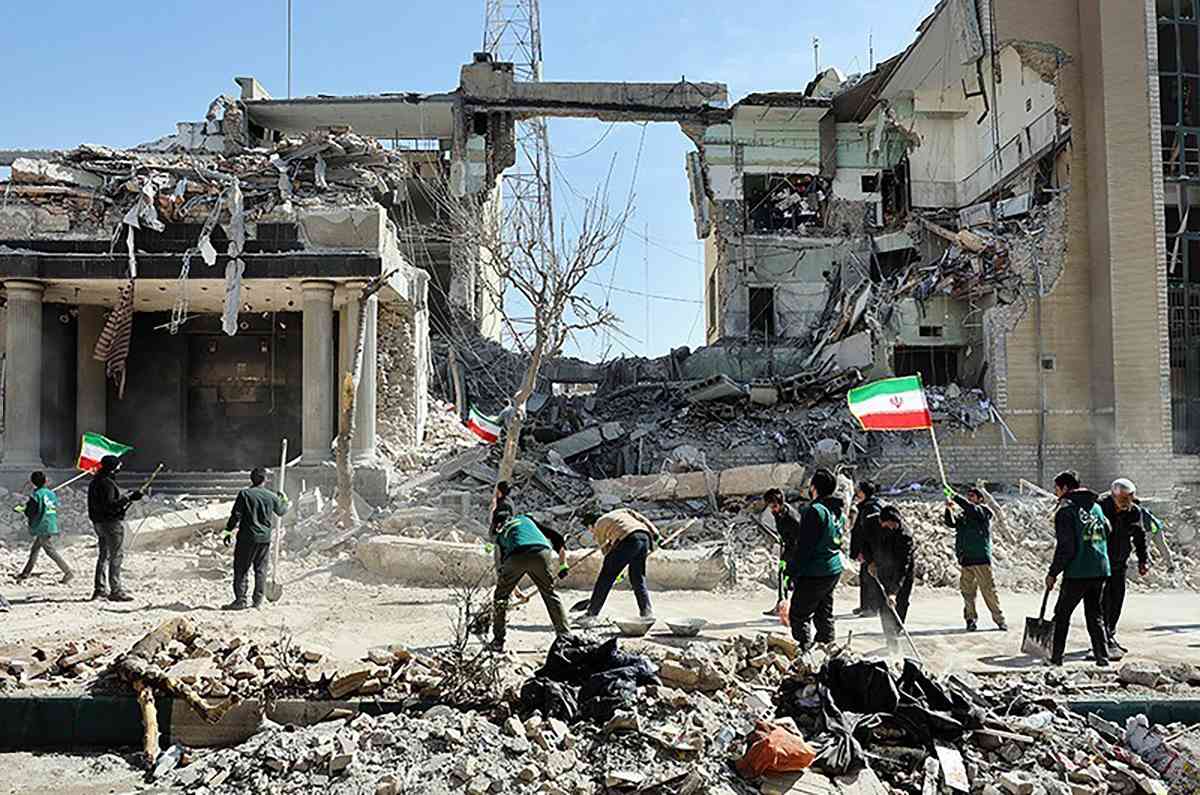
Even cities have shown what is possible when they move beyond incrementalism. Paris is redesigning hundreds of streets simultaneously rather than one corridor at a time. Moscow demonstrated a similarly ambitious approach in the years leading up to the 2018 FIFA World Cup. Within a remarkably short period, the city reconstructed large parts of its historic centre, widened sidewalks, upgraded public spaces, redesigned streets, improved transit interchanges and transformed the public realm on a scale rarely seen in contemporary Europe. Whatever one thinks of the political context, the physical transformation showed how quickly a major metropolis can reshape its urban environment when resources, political will and a clear objective align. Seoul removed an elevated urban highway and restored the Cheonggyecheon stream through the centre of the city, transforming a traffic corridor into one of the world’s most celebrated public spaces. Copenhagen spent decades building a complete cycling system rather than isolated bicycle lanes. Singapore transformed water management from a national vulnerability into a strategic asset through investments that encompass entire watersheds and urban districts. The Netherlands reimagined flood protection through the Room for the River programme, redesigning landscapes at the scale of entire river basins.
History offers countless examples of societies responding to great challenges with equally great ambition. The railways of the nineteenth century connected continents. The electrification of nations transformed everyday life within a generation. The interstate highway system reshaped the geography of the United States. The reconstruction of Europe after the Second World War rebuilt cities, industries and infrastructure at extraordinary speed. None of these transformations were achieved through pilot projects or incremental adjustments. They were achieved because societies decided that the scale of the challenge demanded a response of equal magnitude.
Too often, contemporary debates focus on how to allocate scarcity. Who gets the bicycle space? Who gets the seat? Which user should be prioritised? Yet the more important question may be why we have become so accustomed to managing shortages that we rarely discuss abundance. If millions of people want to combine trains and bicycles, perhaps the answer is not to ration access but to build a transport system capable of serving millions. If cities need affordable housing, perhaps the answer is not merely to regulate existing stock but to build entire new districts. If climate change requires renewable energy, perhaps the answer is not thousands of solar panels but millions.
The crowded trains leaving Berlin on a sunny weekend reveal an uncomfortable truth. Sometimes the greatest challenges emerge not from failure, but from success. When societies succeed in changing behaviour, they must be prepared to change infrastructure, institutions and investment priorities with equal determination.
The sustainability transition is often described as a great transformation. Yet transformations are not achieved through small adjustments alone. They require societies to think, plan and build at a scale that matches their ambitions. If the problems created by success are becoming larger, perhaps the solutions must become larger as well. Not slightly larger. Not marginally larger. But large enough to meet the scale of the transformation already underway.
Cover image AI generated