AI appears weightless. Its urban footprint is anything but.
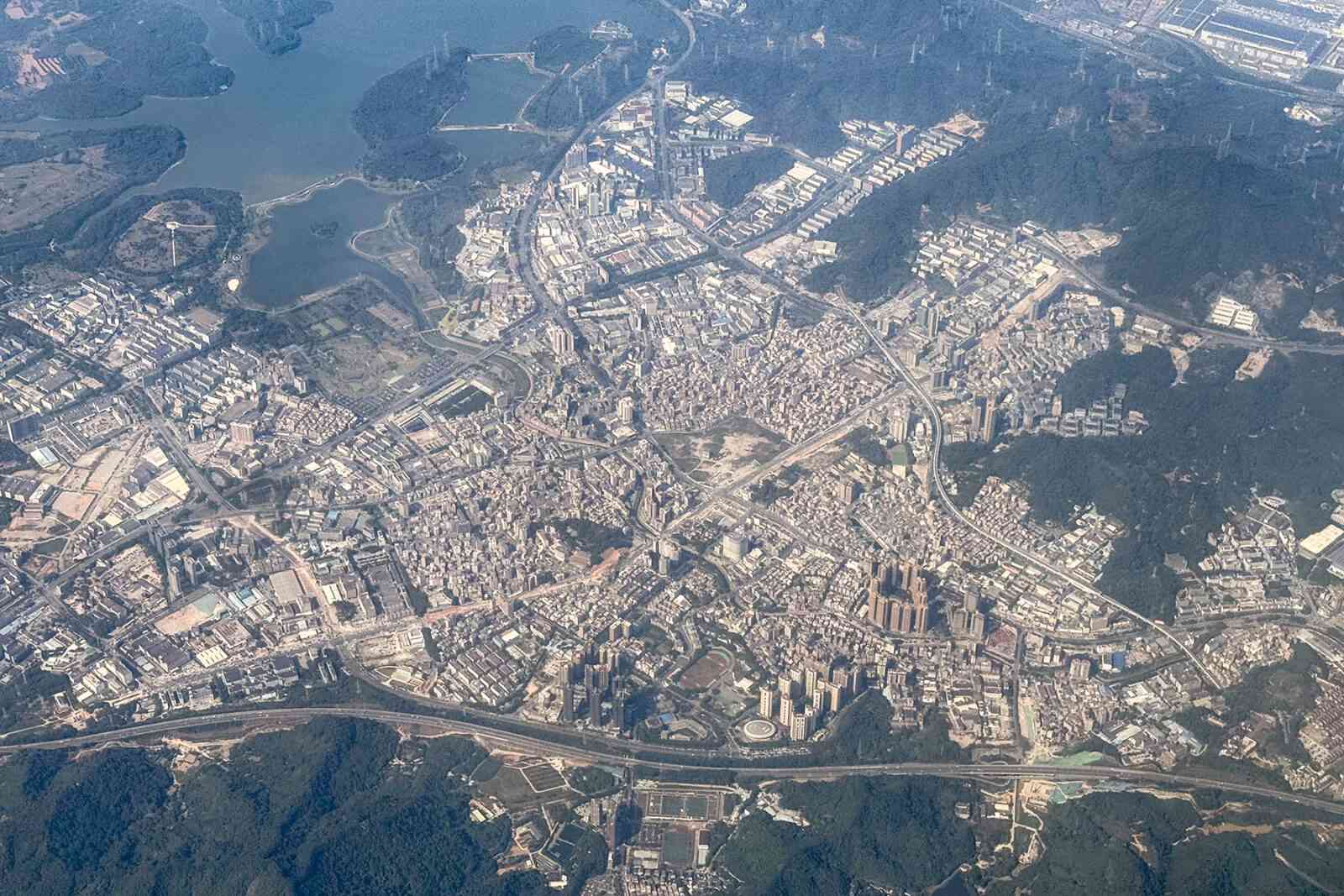
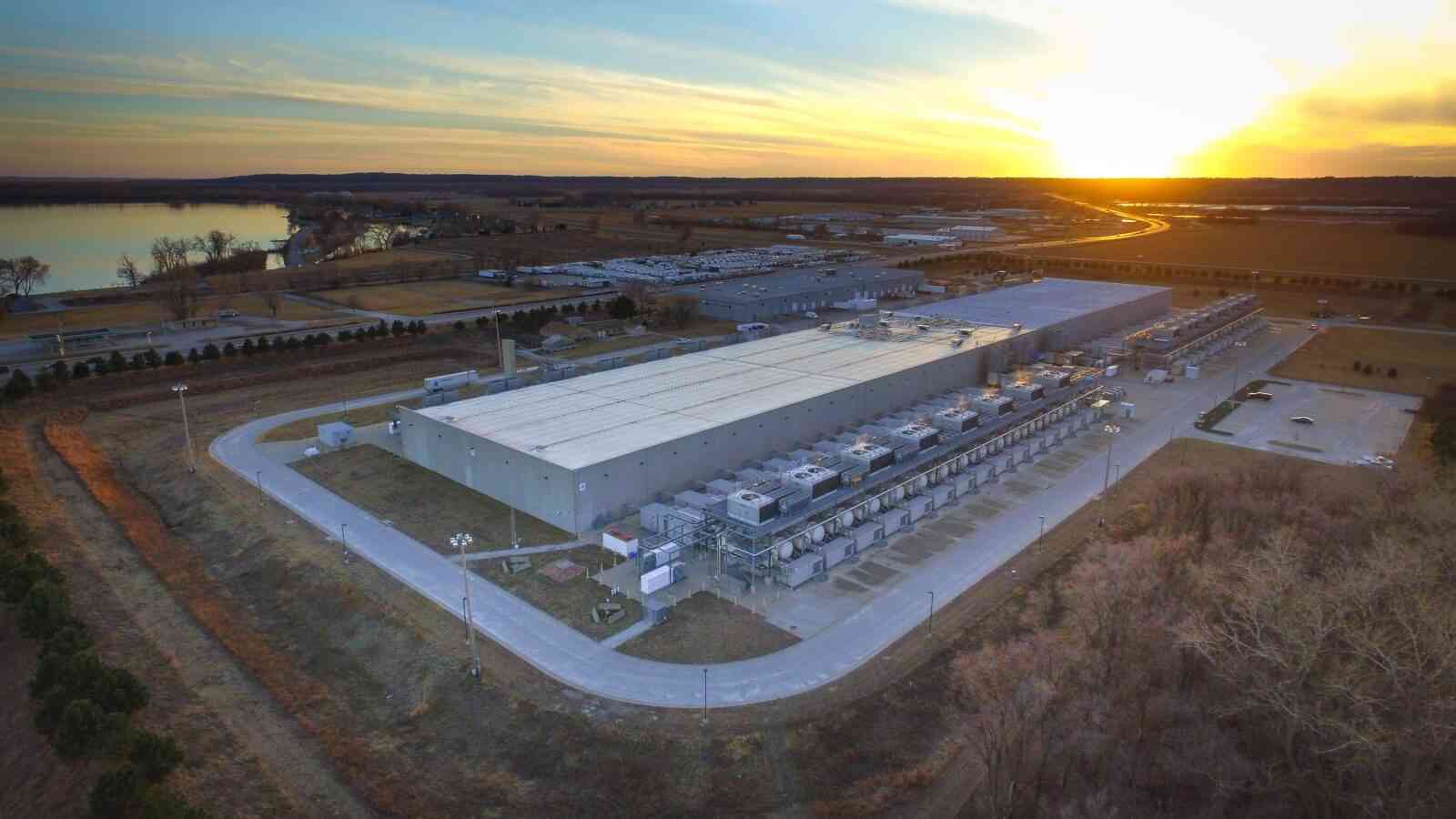
We experience artificial intelligence as a small blinking cursor. We type a question; an answer arrives. The exchange seems instantaneous, placeless and almost immaterial. But every prompt enters a physical world. Behind the screen stands an expanding landscape of windowless halls, substations, transmission corridors, cooling towers, water pipes, diesel generators, security fences and access roads. It is a city built for machines: enormous in appetite, sparse in people and largely closed to public life. AI is therefore not merely a technological revolution. It is one of the largest and least publicly debated land-use transformations of our time.
The question is no longer whether cities need digital infrastructure. They do. The question is whether communities should surrender land, electricity, water and public revenue to facilities whose benefits are globally distributed while many of their costs remain intensely local.
The invisible industrial city
The scale is becoming difficult to ignore. Data centres consumed about 4.4% of all electricity in the United States in 2023. A US Department of Energy–funded study by Lawrence Berkeley National Laboratory projects that their share could reach between 6.7% and 12% by 2028. In other words, within a few years, as much as one-eighth of the electricity used by the world’s largest economy may flow into buildings most citizens will never enter.
This demand does not stop at the data-centre wall. A hyperscale campus requires new substations, high-voltage lines, generating capacity and backup systems. It can influence where energy infrastructure is built, which landscapes carry transmission corridors and who pays for grid reinforcement. New modelling from Carnegie Mellon University suggests that data-centre and cryptocurrency growth could raise average US electricity-generation costs by 8% by 2030, with increases exceeding 25% in parts of central and northern Virginia if policy does not change. The supposedly virtual economy is becoming an organising principle of physical territory.
Planning systems have been slow to recognise this because data centres arrived disguised as ordinary industrial or commercial buildings. Yet a warehouse stores objects. A factory combines labour and materials to make products. A data centre is closer to a power station turned inside out: it consumes immense quantities of electricity to produce computation, then spends further energy and sometimes water removing the heat.
Its architecture tells the story. Few windows. Few doors. Little street life. No mixed use. No public realm. A great deal of infrastructure, but very little city.
When development removes more than it adds
Data centres do not “kill” cities or villages in a cinematic sense. Their effect is quieter. They can make a place less capable of functioning as a community: They do this when productive farmland or potential housing land is converted into a sealed compound; when grid capacity is reserved for servers while homes and ordinary businesses wait; when water is allocated to cooling during drought; when public authorities waive taxes for projects with few permanent employees; or when nearby residents inherit a constant mechanical hum without sharing meaningfully in the wealth generated inside.
Northern Virginia offers the clearest preview. It is already the world’s largest data-centre market. A 2024 state review found that a typical 25,000-square-meter facility may employ only about 50 full-time workers, roughly half of them contractors. Construction can bring around 1,500 workers at its peak, but usually for only 12 to 18 months per building. The long-term employment density remains exceptionally low for the amount of land, power and public attention involved.
In Prince William County, the proposed Digital Gateway would have allowed as many as 37 data centres across roughly 700 hectares near the Manassas battlefield. The dispute is not simply about whether one likes large buildings. It is about the planned conversion of an entire landscape: from rural and historic territory into a continuous machine district, accompanied by substations and transmission infrastructure. Courts voided the county’s approval over defective public notice, and the legal conflict continues.
The everyday impacts are also less abstract than industry renderings suggest. Virginia’s legislative review found that almost one-third of operational data-centre properties examined were within 200 feet of residentially zoned land. Residents near some facilities described migraines, interrupted sleep and the loss of enjoyment of gardens and terraces because of constant low-frequency noise. The same review found an average of 54 permitted backup generators at each data-centre site. They may run infrequently, but their presence reveals the redundancy required to keep the digital world permanently available.
The result is an odd urban bargain: residents are expected to tolerate an industrial landscape so that distant users never notice a moment of interruption.
Zeewolde: the village that said no
The conflict is not uniquely American. In Zeewolde, a Dutch municipality of roughly 23,000 people, Meta planned a 166-hectare hyperscale data centre on agricultural land. Its projected annual electricity consumption was about 1,380 gigawatt-hours – more than twice the power used by the local community.
Here was the imbalance in unusually clear form: a global platform wanted a local landscape, local renewable electricity and favourable public decisions, while offering relatively little connection to the town’s daily economy. The council initially approved the plan, but national political resistance grew, Meta withdrew in 2022, and the Netherlands’ highest administrative court later annulled the zoning plan.
Zeewolde matters because it exposed the central planning question. Is a data centre merely a private development on an industrial plot, or is it a territorial decision about the allocation of scarce national resources? Once the project’s energy and land requirements were understood, it became impossible to treat it as a routine building permit.
Santiago: computation in a thirsty city
Water makes the trade-off even more visible. In Cerrillos, on the edge of Santiago, Google proposed a second data centre during a long and severe drought. The original water-cooled design was authorised to draw roughly 169 litres per second from the Santiago Central aquifer. Residents organised, a local referendum showed strong opposition, and Chile’s environmental tribunal ruled that the approval had failed to consider adequately the effects of climate change on the aquifer. Google withdrew the original project in 2024 and said it would begin again with air-based cooling.
This was not an anti-technology revolt. It was a demand for climatic realism. Cooling design is not a minor engineering detail when a metropolitan region is discussing water rationing. The community forced the project to acknowledge the physical limits of its location.
Yet there is no impact-free cooling system. Reducing water consumption can increase electricity demand. Air cooling may avoid pressure on an aquifer while adding pressure to a grid. The responsible question is therefore not, “Which resource can we consume invisibly?” It is, “Is this the right facility, at this scale, in this place—and who bears the cumulative cost?”
Ireland: when the grid becomes the plan
Ireland shows what happens when national digital policy outruns energy planning. Data centres used 22% of the country’s metered electricity in 2024, up from 5% in 2015. They consumed more electricity than all urban households, which accounted for 18%. The state has now had to treat data-centre connections as a strategic energy question. Ireland’s utility regulator requires new facilities to provide matching generation or storage capacity, secure at least 80% of annual demand from additional Irish renewable projects, and take account of whether the proposed location is already constrained. Even with these rules, the regulator expects data-centre demand to rise to 31% of national electricity consumption by 2034.
This is no longer a niche land use. It is a parallel energy system growing inside the national one. And it creates a profound question of priority. Every grid has limits. Electricity promised to a server campus is capacity that cannot simultaneously heat a home, power a tram, electrify a factory or decarbonise an existing neighbourhood. The issue is not that one use is always more worthy than another. It is that these choices are being made, often without the public debate appropriate to their scale.
The myth of the jobs machine
The political case for data centres usually rests on three promises: investment, tax revenue and jobs. The first is real. The second depends heavily on the agreement. The third is frequently exaggerated by combining temporary construction employment with sparse long-term staffing.
Orangeburg, New York, offers a brutal illustration. A public agency approved nearly $77 million in tax breaks for the expansion of a JPMorganChase data centre that promised exactly one permanent job. The project was also expected to support more than 1,400 temporary construction jobs, and officials argued that wider economic benefits justified the agreement. But the arithmetic still exposes the weakness of conventional development policy when applied to this building type.
Data centres are capital-intensive, not labour-intensive. That does not make them useless. It does mean that subsidies designed to exchange public revenue for lasting employment are poorly matched to them. Communities may gain a valuable tax base, particularly where computer equipment is taxed effectively. Loudoun County has financed public services with data-centre revenue on a remarkable scale. But dependence carries its own danger. A locality that allows one industry to dominate both its landscape and its budget may eventually find it difficult to say no to the next campus, substation or transmission line.
Planning has finally begun to catch up
By September 2026, the Urban Institute counted 313 data-centre moratoriums affecting 44 US states and more than 200 cities, counties and other localities. This is not evidence of a coordinated war on AI. It is evidence that ordinary planning tools have proved unequal to an extraordinary new land use. A moratorium is useful only if it becomes a period of institutional learning. The task is not to ban digital infrastructure, nor to accept every proposal wrapped in the language of innovation. It is to establish a new urban contract.
That contract should begin with three principles:
- First, growth must pay its full territorial cost. Developers – not households – should finance the generation, grid reinforcement, water infrastructure, road upgrades and eventual decommissioning their facilities require. Tax incentives should be conditional, transparent and proportional to verified public benefits.
- Second, approval must be based on cumulative resource budgets, not isolated site assessments. A technically efficient facility can still be the wrong development in a water-stressed basin, a grid-constrained region or a housing-starved metropolitan area. Land, energy, water, emissions and noise need to be assessed together.
- Third, communities need a meaningful right to shape the bargain before land is rezoned or incentives are signed. Public authorities should disclose expected peak electricity and water demand, backup generation, permanent employment, tax concessions and infrastructure obligations in language that residents can understand.
We should resist one final illusion: that the cloud floats above geography. It does not. It sits on someone’s land, drinks from someone’s watershed, connects to someone’s grid and appears on someone’s electricity bill. The chatbot may feel universal, but its foundations are always local.
The city behind the screen is already being built. The urgent task is to make it visibleand – therefore governable – before its demands become the limits within which every other urban ambition must live.
AI tools have been used to improve spelling, grammar and expression.
Cover image: wikimedia.org