What a city that has almost everything might still be missing.
Zürich is a strange place to arrive as an urban planner. Usually, a city gives you something to worry about. A station that has forgotten its neighbourhood. A waterfront held hostage by a road. A public square whose principal public consists of parked cars. Zürich gives you the uncomfortable suspicion that your services may no longer be required. Everything appears to have been considered, funded, delivered and entered into a maintenance schedule. You start looking for something to improve, partly out of professional interest and partly to recover your self-esteem.
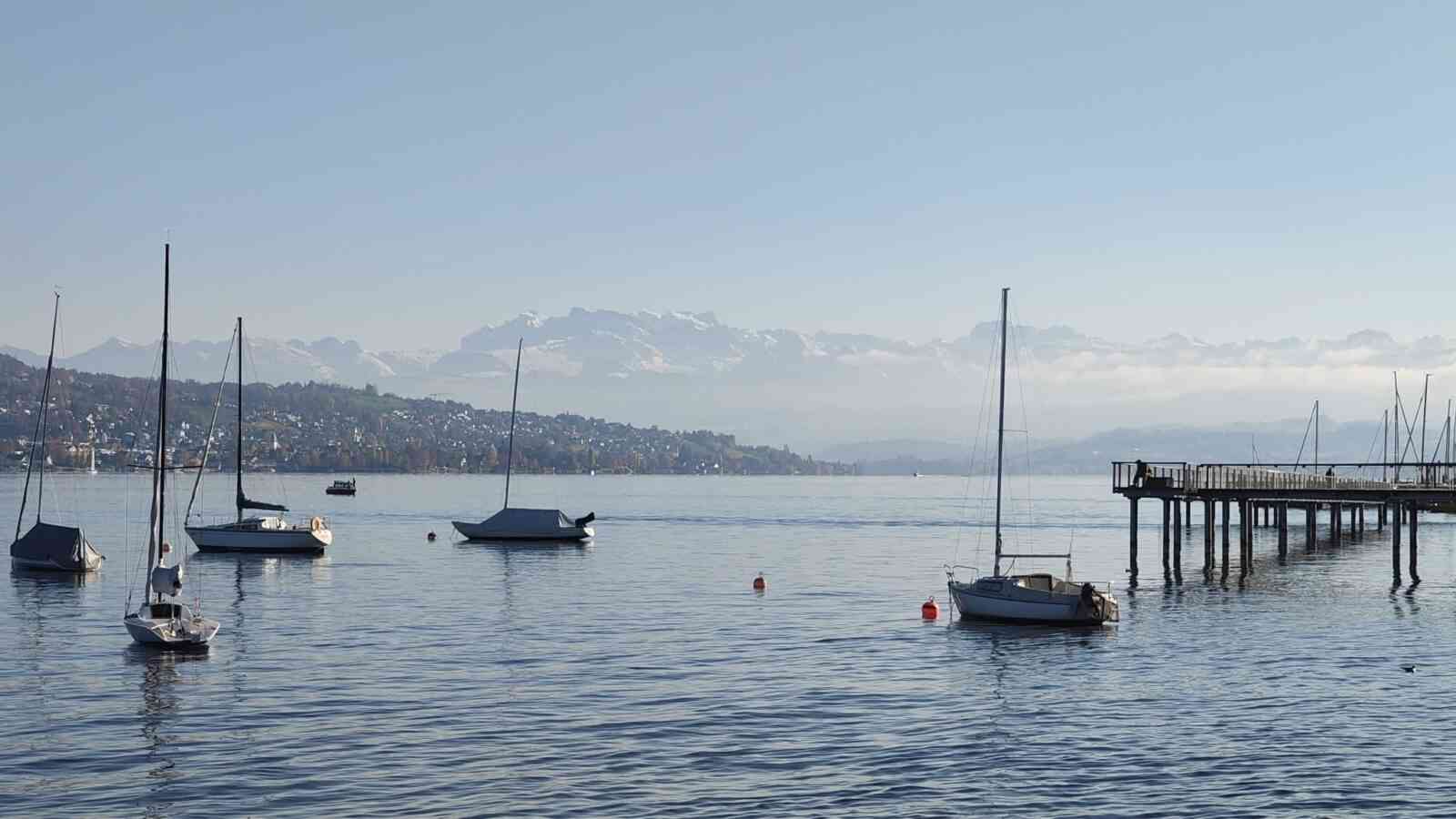
The setting does not help. A lake, distant Alps, a city arranged like a balcony overlooking its own good fortune. On a clear day, the landscape supplies a grandeur that no municipal design department could reasonably claim credit for, although one suspects the relevant documentation exists. Zürich has been given an extraordinary location and has had the resources to make excellent use of it. There is much to admire. There is also something oddly difficult to enter.
At street level, the generosity of the setting does not always survive. Walking through parts of the city, I am struck by how hard the ground feels: tarmac from wall to wall, concrete, kerbs, surfaces designed to endure almost everything except tenderness. There are trees, parks and lovely stretches of waterfront, of course. But between them, too many streets seem to treat greenery as a specialised service delivered elsewhere. I do not mind concrete. Concrete can be beautiful, expressive, even affectionate. Combined with uninterrupted asphalt, however, it can make a street feel like a place where you are permitted to pass through but have not quite been invited to stay.
The metalwork reinforces the impression. Stainless steel. Brushed aluminium. Grey objects placed against other grey objects, each apparently selected for its ability to resist weather, fingerprints and emotional attachment. Nothing is likely to rust, which is sensible. Nothing is likely to surprise you either. After a while, advertisements begin to perform an unexpected public service. They bring colour. A poster trying to sell me something becomes the most exuberant participant in the streetscape. I find myself grateful to a marketing department for introducing a shade the public realm could not quite bring itself to approve.
This is curious in a city that also wants to be hip. Zürich has the cultural institutions, the design intelligence, the educated population and the carefully credible places to drink. Yet at roughly nine euros a beer, as a visitor mentally converting the bill, spontaneity begins to require a budget line. You can certainly be young and unconventional here, provided your unconventionality has a reliable income. The interesting question is what happens to the person with a questionable idea, three friends and very little money. Can they afford to remain long enough for the idea to become interesting?
Wealth can support culture magnificently. It can also quietly narrow the range of people who get to produce it. Cities need room for activities whose value is initially unclear, including to the people doing them. A cheap room, an undemanding landlord, an evening that can continue without anyone checking their bank balance: these are modest things, but entire cultural scenes have depended on them. Once every square metre needs a convincing business case, experimentation acquires the demeanour of a project proposal. Even rebellion starts arriving with excellent typography.
The museums, ETH and the evident seriousness of the place deserve admiration. Still, moving among so much accomplishment, I occasionally feel less invited than assessed. Everything seems to know what it is doing. As an urban planner, I find this both reassuring and faintly depressing. My professional instincts have been trained by places where the distance between what exists and what people need is painfully visible. In Zürich, the argument can feel as though it concerns whether the finish should be gold or silver, while elsewhere the question is whether the thing will exist at all. That is an enormous achievement. It also changes the emotional stakes of working on a city.
There is a danger here of becoming sentimental about dysfunction. I know it. Broken pavements are more charming when you do not have to push a wheelchair over them. Cheap space can conceal poor housing, insecure livelihoods and years of neglect. Nobody struggling with unreliable public services needs a visiting architect to explain the creative advantages. Zürich’s competence is valuable precisely because so many people elsewhere spend their lives compensating for its absence. The task is to keep that competence while asking more of the life it makes possible.
Perhaps that is where meaningful work remains. A street can function perfectly and still make you want to leave. A beautifully maintained square can offer nowhere you would willingly spend an unplanned hour. A prosperous city can become more generous with shade, colour, affordable space and the freedom to do something slightly foolish. These qualities are harder to specify than a material finish. They depend on how people are allowed to occupy the city, and on whether someone without much money can contribute something that nobody thought to commission.
From its balcony above the lake, Zürich has every reason to feel pleased with itself. I would simply like a little more softness underfoot and a little less certainty about how everything should look. Some colour that is not selling anything. Somewhere an improbable idea can survive its first winter. And perhaps a beer cheap enough that, after admiring the view, you decide to stay for another.
AI tools have been used for spelling, grammar and enhancement of expression.